

People announce being unreachable now. "Sorry, I was off grid this weekend," said with a small note of pride, like it was an achievement rather than just a Saturday. Ten years ago that sentence would not have made sense to anyone. Off grid from what.
Notice how much work that phrase is quietly doing. It treats unreachability as a place you travel to, something rare enough to name and almost boast about, rather than a default state that used to require no explanation at all. Somewhere along the way, being unreachable stopped being the norm and became an event, and the fact that we now need a phrase for it at all is the whole story.
There is a specific kind of nostalgia going around right now, and most people misname it without realising. They call it missing "simpler times," missing childhood, missing before phones got smart enough to run our lives. Ask them to sit with it a little longer, though, and the story usually changes shape. What they end up describing is not a decade. It is a feeling. And once you notice it, you cannot unsee it.
The Feeling Underneath the Memory
Ask someone what exactly they miss about that old summer, that old bedroom, that old routine, and push past the first answer. They will start with the aesthetic details, the specific light, the specific boredom, and then land somewhere close to: nobody needed anything from me right then. That is the real content of the memory. The setting was just where it happened to occur.
This matters, because misdiagnosing the longing sends people looking for the wrong cure. They buy the disposable camera, delete the apps for a weekend, try to recreate a decade that is not coming back, when what they actually needed was much smaller and far more available than that.
The disposable camera does not work because the camera was never the point. It could take bad photos in poor light and nobody minded, because nobody was going to see them within the hour anyway. The charm was never the grain. It was the lag built into getting the film developed, the built-in permission to not know yet.
What they needed was to be unreachable for a while, without it meaning anything.
Notice the specific relief of that phrase. Not unreachable because something is wrong. Not unreachable because you are punishing anyone or being punished. Just unreachable the way a shop is closed on a Sunday, no explanation required, no one waiting on the other side of the door to be disappointed by it.
Contactable Is a Full-Time Job
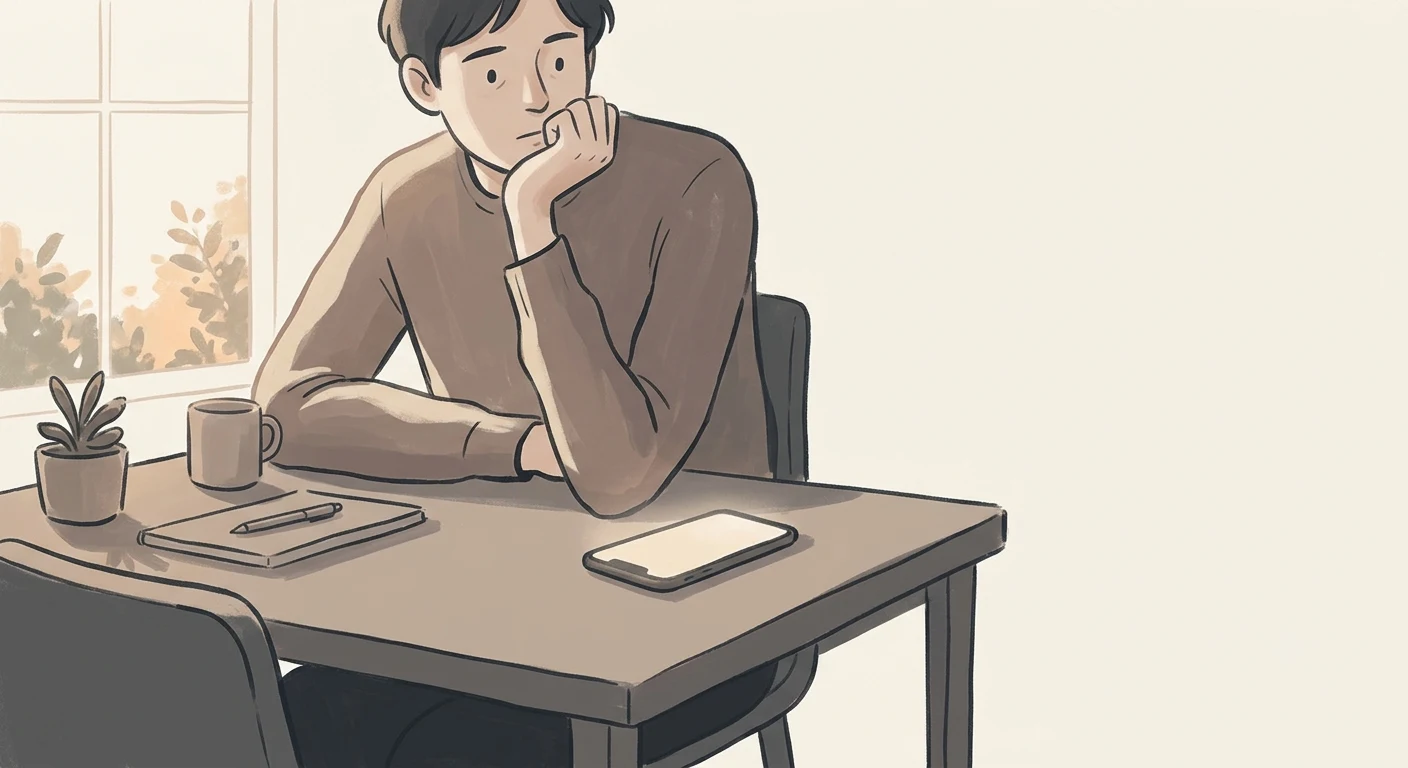
Here is what nobody tells you about that feeling: it did not disappear because you grew up. It disappeared because being reachable quietly turned into a job. Nobody clocks in for this shift and nobody clocks out, but it runs underneath every other part of the day, and like most invisible labor, it only becomes visible once you try to stop doing it.
Think about what actually goes into staying reachable. The read receipt that tells someone you have seen their message and are now, technically, choosing not to respond. The "active now" indicator that turns a delay into a decision. The typing bubble that appears and disappears twice before you have committed to a sentence. None of these features exist to help you communicate faster. They exist to remove the plausible deniability that used to protect people from having to explain themselves.
It is worth noticing that none of this was requested. Nobody asked to have their delays turned into visible data points. The infrastructure simply started collecting proof of presence, and once that proof existed, absence needed a reason in a way it never had before.
You used to be able to simply not have seen it. Now you have to have a reason.
Nobody sent a memo announcing this. It simply became the norm because enough people, enough of the time, started responding fast enough that the baseline quietly moved for everyone at once, and nobody was in the room to vote against it.
You can feel the shift most clearly in the apology that has become standard vocabulary now: sorry for the late reply. Said for a two-hour gap. Said for something that used to not register as a gap at all. The sentence exists because the job exists, and you are its only unpaid employee.
Why Turning It Off Does Not Turn It Off
So you try the obvious fix. Phone face down. Phone in another room. Every focus mode the operating system offers you. And you can still feel the pull of it, because the setting only switches off the notifications. It does not switch off the expectation, and the expectation was never coming from the phone in the first place. It was coming from years of training everyone around you, including yourself, that a response within the hour is the baseline and anything slower requires an explanation.
So even in a genuinely quiet room, with the phone off, part of your attention stays reserved for it, the way you keep half an ear out for a kettle you know is about to boil. The device has gone silent. The vigilance has not.
This is the part people rarely admit out loud. Turning the phone off does not feel like relief. It feels like holding your breath, because the silence is not neutral. It is full of everything that might be accumulating on the other side of it, waiting to arrive all at once the second you turn it back on.
Which is exactly why so many people check "just in case" thirty seconds after switching the phone off, then feel faintly embarrassed by it. That is not weak willpower. That is a system doing exactly what years of training taught it to do, protecting you from a version of missing out that used to not exist as a category of loss at all.
You do not need to disappear.
You just need permission to be quiet.
The Guilt Nobody Warned You About
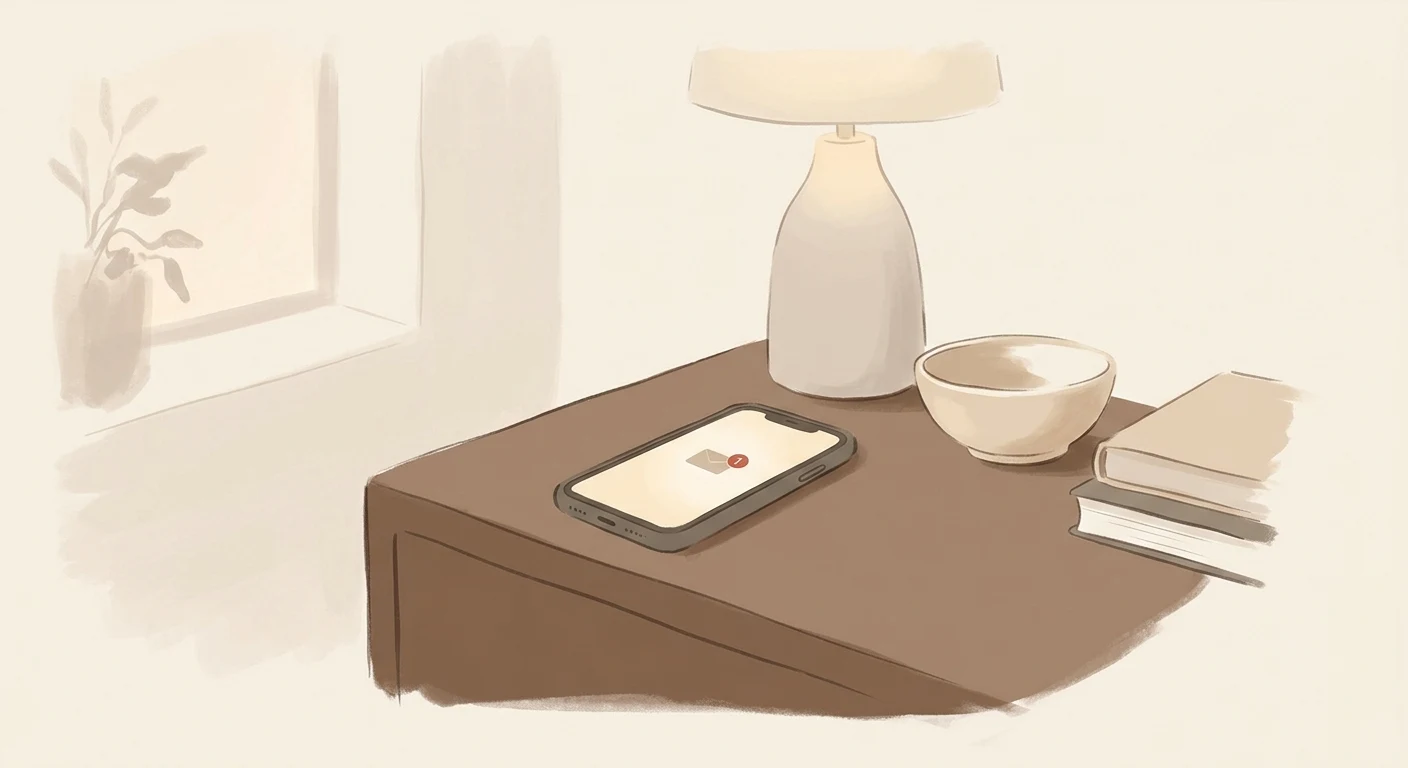
Go quiet for a day now, even by accident, and you will likely resurface to something that sounds a little like concern and a little like a complaint. Everything okay? You went dark today. It rarely comes from malice. It comes from a world that has quietly redefined non-response as an event that requires acknowledgement, rather than a neutral, ordinary thing that used to happen constantly and mean nothing at all.
Ten years ago, going quiet for a day did not require an apology tour when you came back. It was not read as withdrawal. It was just a day. So if you have ever felt a small twist of guilt for simply not looking at your phone, hear this clearly: that feeling is not a personal failing. It says nothing about how much you care about the people waiting on you. It says everything about how thoroughly constant availability has replaced occasional silence as the default setting of a relationship.
There is a quieter version of this guilt too, one that has nothing to do with other people at all. It is the discomfort of sitting with your own unread notifications, the small red numbers that stack up like unfinished chores. Even alone, with nobody actually waiting on you, the sight of them can produce a low hum of obligation, as though quiet time were something you would eventually have to pay back.
Notice what that means. The guilt has stopped needing another person to exist. It runs on its own now, powered by nothing but a number in the corner of a screen.
What This Costs the People Around You
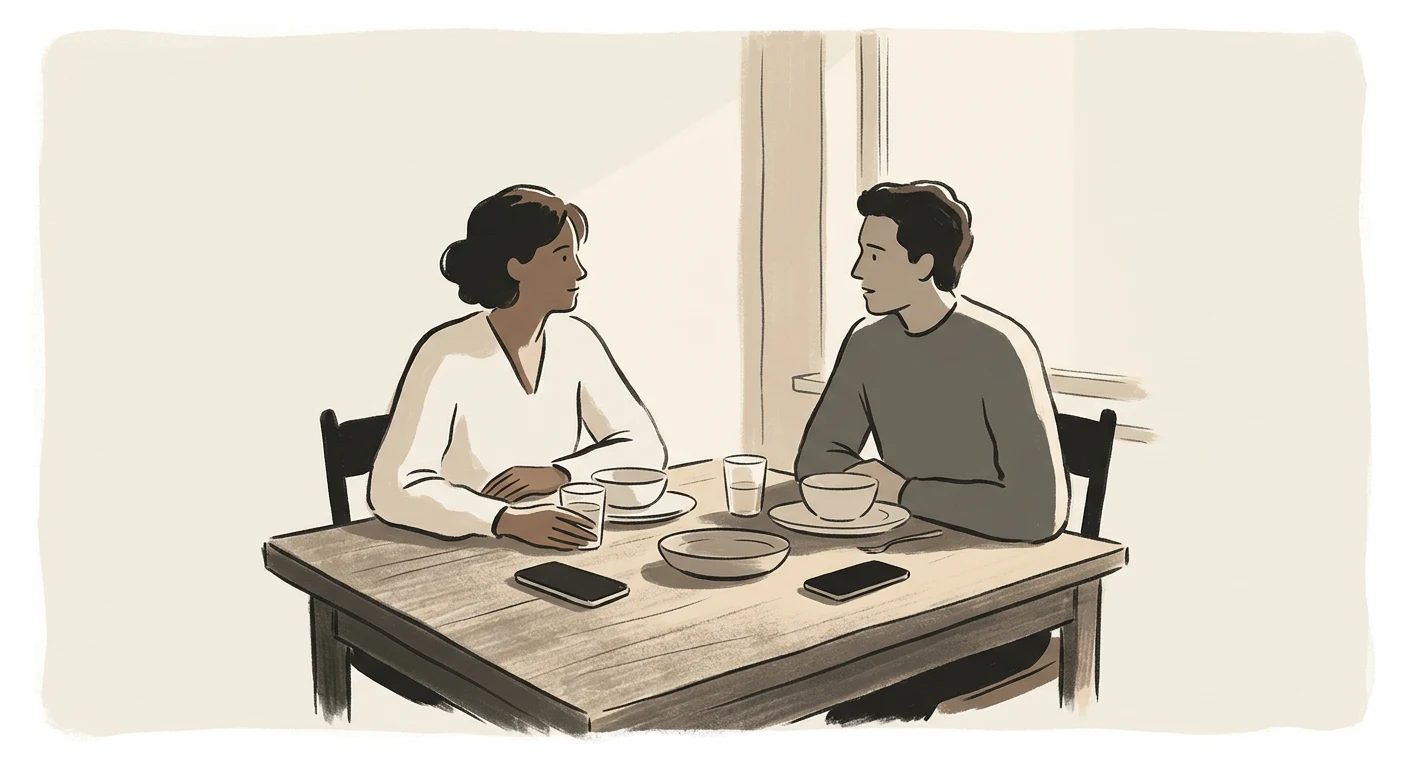
Here is the part that gets missed most often. This is not only happening to you privately. It is reshaping what closeness actually looks like between people. The friends who feel most easy to be around now are rarely the ones who reply within the hour. They are the ones who do not treat a six-hour gap as evidence of anything. They do not panic when you are slow, and they do not apologise when they are.
That casualness used to be the default setting of every relationship, not a rare trait a few lucky people happened to have. It came free. Now it has to be quietly rebuilt, one unremarkable non-response at a time, by two people who trust each other enough to let a gap mean nothing.
You can usually tell within the first month of a friendship whether this kind of trust exists. It shows up not in the big gestures but in the small ones, in whether a slow reply gets treated as information or ignored as noise. The friendships that last tend to be the ones where a silence is allowed to just be a silence.
Closing Thought
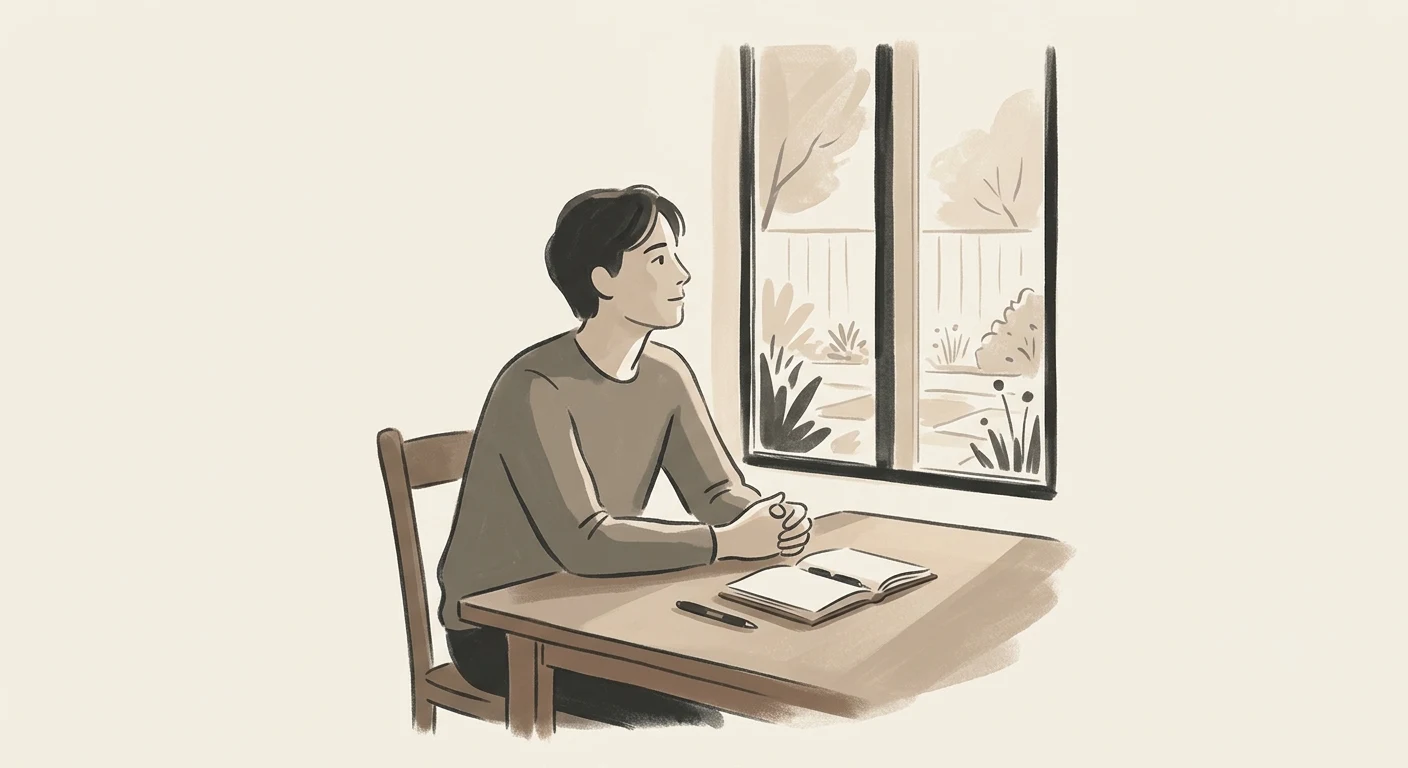
None of this requires a digital detox retreat or a symbolic flip phone purchase. Most people do not actually want to be unreachable forever. They want small, unremarkable pockets of it back. An hour where the phone is in another bag. A dinner where nobody photographs the guilt of a slow reply later. A Sunday morning that does not open with three unread threads waiting to be triaged before the day has properly started.
An hour is usually enough to remember what the feeling is actually made of, because the relief was never about the length of the absence. It was about the fact that, for once, nobody was owed anything from you during it.
Pick the hour on purpose. Not the middle of the night when nobody would notice anyway, which does not count. An hour with actual stakes attached, a Saturday afternoon, a dinner, the part of the day when you would normally be half-present and checking. Let it be small enough that nobody has to build a whole ritual around it, and specific enough that you actually feel the difference when it is over.
The easiest way back in is rarely dramatic. Name the hour out loud to the two or three people who might actually notice, and then simply do not check. Not as a statement. Not as a boundary announcement. Just as an ordinary hour, the kind you used to have by default, before anyone thought to ask where you were.
What tends to surprise people the first time they try this is not the peace of it, though that comes too. It is how little actually happens while they are gone. The messages that felt urgent enough to justify constant checking turn out, almost always, to still be sitting there an hour later, entirely unharmed by the wait.
You are not missing a decade.
You are missing a version of yourself nobody could interrupt.
That version of you is not gone. She is just waiting for an hour with no expectations attached to it. You are allowed to give her that. You do not need anyone's permission but your own, and now you have it.
Why do I feel so anxious and guilty when I try to put my phone away for a few hours?
You feel anxious because years of constant notifications have trained your brain to treat silence as a looming backlog of chores rather than peace. Your mind is simply anticipating the pile of messages waiting for you when you turn the screen back on. The trick is starting with tiny, low-stakes windows of time so your nervous system can learn that nothing terrible happens while you are away.
How do I start being less available without making my friends and family think I am ignoring them?
Skip the dramatic off-grid announcements and start by simply leaving your phone in another room during a dinner or a Saturday afternoon movie. Let the people closest to you know you are stepping away for an hour, and then actually do it. Over time, you will rebuild relationships where a slow reply is treated as normal noise rather than a personal emergency.
Will buying a dumbphone or going on a weekend digital detox actually solve this?
Probably not, because the technology itself was never the actual problem. The real issue is the invisible expectation of instant replies, which a new gadget or a temporary retreat won't solve. Instead of trying to escape to a past decade, focus on reclaiming small, everyday moments where you simply do not owe anyone a response.