
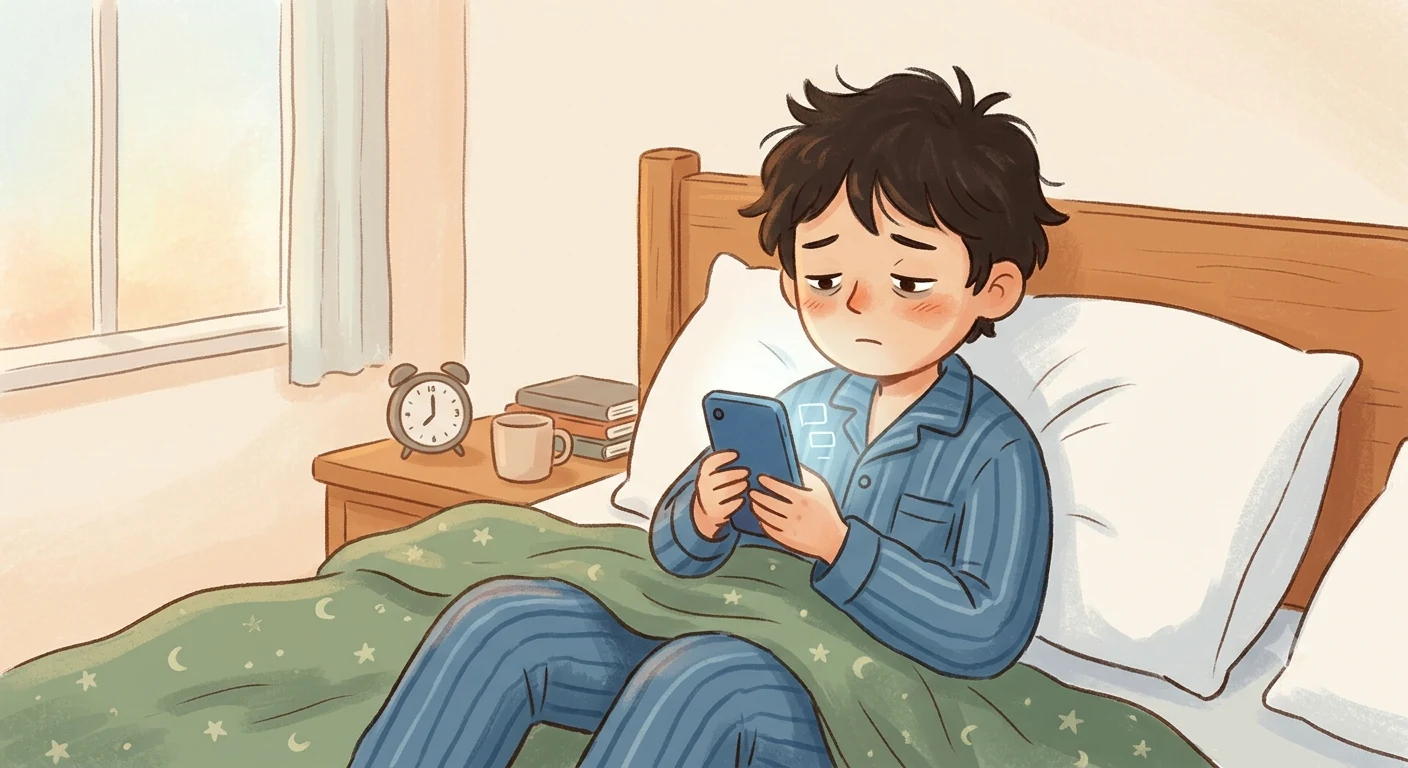
You wake up. You check your phone before your feet hit the floor. By 10 AM you've refreshed 3 apps, started 2 tasks, and finished none of them.
That's not laziness. That's often what low dopamine actually looks like.
Dopamine isn't the "pleasure chemical" everyone claims it is. It's the motivation chemical. And when it's running low, nothing feels worth starting.
This piece covers what low dopamine actually is, how to recognize the signs, and 5 daily habits that make up a practical low-dopamine reset.
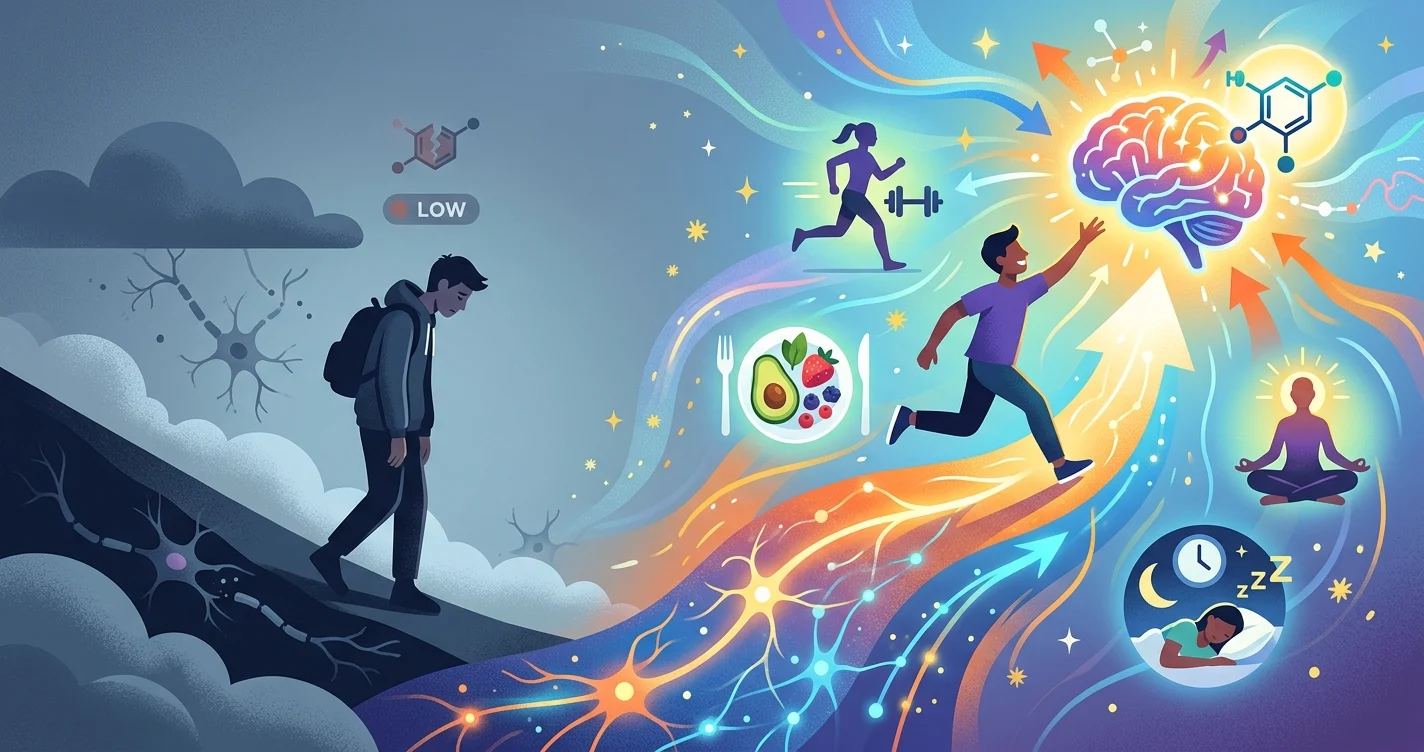
What Is Low Dopamine, Really?
Dopamine is a neurotransmitter that drives motivation, focus, and the anticipation of reward. It's not really about pleasure itself - it's about the pursuit of it.
But here's the part most wellness content skips: "dopamine deficiency" isn't a formal medical diagnosis. Unlike clear-cut deficiencies such as iron or vitamin B12, low dopamine isn't something a standard blood test confirms - dopamine production is tightly regulated by the body on its own, and doctors don't treat it as a standalone condition.
So when this article (and most others online) refer to "low dopamine," it's talking about a functional dip, not a lab-measurable deficiency. Your dopamine system is under-firing, usually from lifestyle factors, not that you have a specific number that's too low.
And that distinction matters. It's why a dopamine reset built on daily habits works for most people, even without a diagnosis.
What Are the Main Signs of Low Dopamine?
The main low dopamine symptoms show up as a cluster, not a single feeling. Think crushing lack of motivation, fatigue that sleep doesn't fix, trouble concentrating, a low mood, and sometimes physical signs like muscle stiffness or a flagging libido.
Here's what that actually feels like day to day:
- Dopamine fatigue - you're tired even after 8 hours of sleep
- Low dopamine brain fog - thoughts feel slow, scattered, hard to hold onto
- Task paralysis - you know what to do, you just can't start
- Flat mood - not sad exactly, just... muted
- Constant urge to check your phone - because low-effort dopamine hits feel easier than real ones
Many people describe this as feeling flat or disconnected rather than sad - like their spark has dimmed. That's the key difference. Depression pulls you down. Low dopamine just switches you off.
Low Dopamine Brain Fog vs Normal Tiredness
This is where most people get confused. Normal tiredness responds to rest. Dopamine fatigue often doesn't.
Even a full night's sleep can leave you flat, with tasks that once felt automatic now requiring real effort. If a good night's sleep and a weekend off haven't fixed the fog, the issue probably isn't rest. It's likely your reward system running on empty.
What Causes Dopamine Levels to Drop?
A few usual suspects show up again and again:
- Overstimulation - endless scrolling trains your brain to expect constant, effortless hits
- Poor sleep - disrupts the dopamine receptors that regulate motivation the next day
- Chronic stress - keeps cortisol elevated, which suppresses dopamine function
- Nutrient gaps - low protein, iron, or B vitamin intake limits dopamine synthesis
- Sedentary days - movement is one of the most reliable natural dopamine boosters, and most people get almost none of it
None of these individually feel dramatic. But stack them for a few weeks and dopamine fatigue creeps in quietly.
How to Fix Low Dopamine: 5 Daily Habits
This is the actual dopamine reset - not a 24-hour fix, but a set of daily habits that rebuild your baseline over time.
1. Start With a Digital Sunset
The digital sunset habit means putting your phone away 60-90 minutes before bed, and keeping it away for the first 30 minutes after waking.
Screens - especially social media - deliver dopamine in fast, unpredictable bursts. Your brain adapts to that pace. And once it does, slower, real-world rewards (a walk, a conversation, a finished task) start to feel boring by comparison.
This one habit alone is often the biggest single lever in a low-dopamine reset.
2. Move Your Body Before You Touch a Screen
Not a full workout. Just 10-15 minutes of movement - walking, stretching, anything - before you open your phone or laptop.
Exercise is one of the most well-supported natural dopamine boosters available, and doing it first sets your baseline for the day instead of letting a feed set it for you.

3. Eat for Dopamine Synthesis
Your brain literally builds dopamine from an amino acid called tyrosine, found in eggs, dairy, fish, and lean meat.
| Nutrient | Role in Dopamine Production | Common Sources |
|---|---|---|
| Tyrosine | Raw material for dopamine synthesis | Eggs, chicken, fish, dairy |
| Iron | Cofactor for dopamine production | Red meat, spinach, lentils |
| B6 & B12 | Support neurotransmitter conversion | Poultry, eggs, fortified grains |

Low dopamine can stem from genetics, stress, poor nutrition, or underlying medical conditions, which is exactly why diet alone won't fix everything - but it's a foundation the other habits build on.
4. Rebuild Your Tolerance for Boredom
This sounds counterintuitive, but it might be the most important habit on this list.
Sit with boredom instead of immediately reaching for your phone. 5 minutes at first. Then 10. This retrains your dopamine system to stop expecting constant stimulation, which is the actual mechanism behind most "dopamine detox" advice you've seen online.
5. Set 1 Small, Winnable Task Each Morning
Motivation doesn't come before action. It comes after a small win.
Pick 1 task you can finish in under 20 minutes. Do it first. The completion itself triggers a dopamine release, and that release is what makes the next task feel possible.
Motivation isn't something you wait for. It's something you generate by finishing small things first.
How Long Does a Low-Dopamine Reset Take to Work?
Most people notice a shift in focus and mood within 7-14 days of consistent habits. But full recalibration takes longer.
Meaningful, receptor-level recovery generally requires 2-4 weeks minimum, and more entrenched patterns can take 60-90 days to fully reset.
So, does that mean 2 weeks of effort is wasted? Not at all. Early improvements in focus and energy are real - they're just the first phase, not the finish line.
What are the main signs of low dopamine?
The main signs are low motivation, fatigue that doesn't improve with sleep, trouble concentrating (often described as brain fog), a flat or muted mood, and a strong pull toward low-effort stimulation like scrolling. It's a cluster of symptoms, not just one feeling.
How long does a low-dopamine reset take to work?
Most people notice initial improvements in focus and mood within 7-14 days. Deeper receptor-level recalibration typically takes 2-4 weeks, and for long-standing habits, closer to 60-90 days of consistency.
What is the difference between a dopamine reset and a dopamine detox?
A dopamine detox usually means a short, strict break from stimulating activities like social media or sugar. A dopamine reset is broader - it's an ongoing set of daily habits (sleep, movement, nutrition, reduced screen time) built to restore your baseline over weeks, not days. You can't actually "detox" from dopamine itself, since it's a neurotransmitter your brain needs to function.
Can food alone fix low dopamine symptoms?
No. Food supports dopamine production, but it can't fully fix low dopamine symptoms on its own. Nutrients like tyrosine, iron, and B vitamins provide the raw materials for dopamine synthesis, but sleep, movement, stress levels, and screen habits all play an equally significant role.
Is low dopamine the same thing as ADHD or depression?
No. Brain scans of people with ADHD or restless legs syndrome don't reliably show significant reductions in dopamine levels, and low dopamine symptoms aren't the same as clinical depression, even though they can look similar from the outside. If symptoms are persistent or severe, that's a conversation for a doctor, not a lifestyle fix.