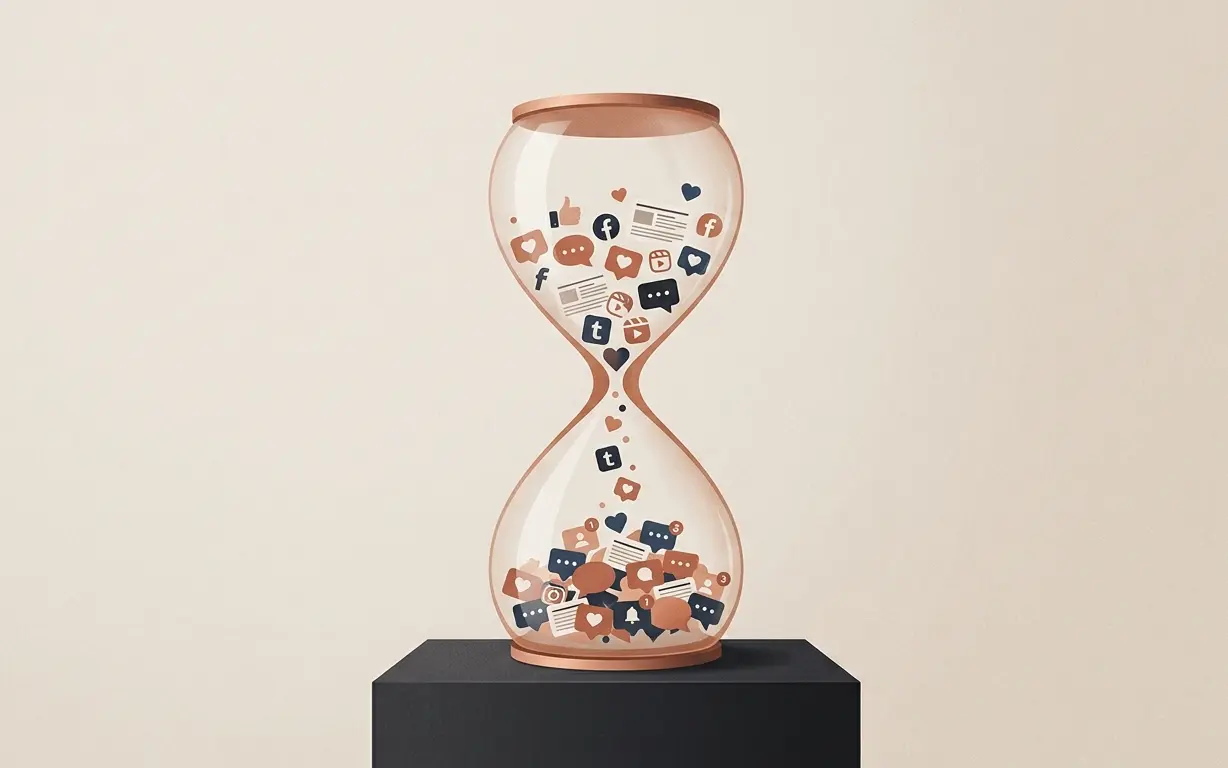

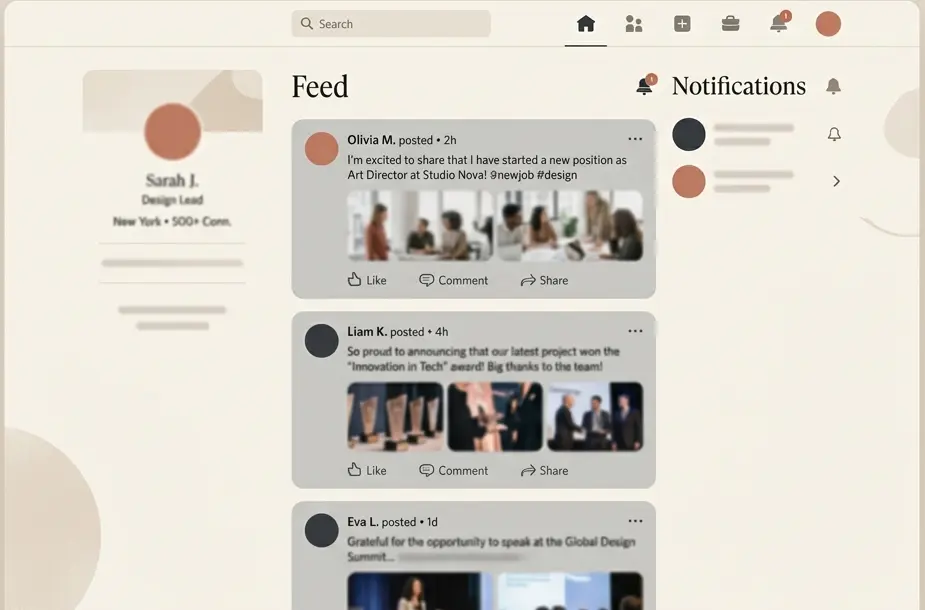
Recently, I have found myself opening LinkedIn to check messages. Ten minutes later, I was still scrolling-watching someone celebrate their dream internship, another professional announce a promotion, and a fellow college student showcase their fifth certification of the month.
What began as a quick check had quietly turned into an unexpected audit of my own progress!
This summer, I consciously chose not to pursue an internship so I could focus on upcoming exams and long-term academic goals. Yet, instead of feeling motivated, each scroll left me feeling a little more exhausted, distracted, and uncertain about whether I have taken the right decision for my career. And yet, the next day, I am doom scrolling again.
The point that is apparent - if scrolling often leaves me anxious, distracted or overwhelmed, why do I keep coming back to it every other day?
The Feed - “Never Enough”
Welcome to this blog, where I try to make sense of something I have been noticing in my own life lately: Attention
Not the attention of an opposite gender nor the validation we hope to receive from society but the attention that the platforms are quietly competing for every single day!
Let’s say, when was the last time you finished scrolling because you felt satisfied? Can you remember? For me, honestly I haven’t. Unlike books, movies or newspaper, this social media thingy has no natural end. There is always one more post, one more reel or another achievement waiting around the corner. As I kept thinking about this, I found myself looking at it through the lens of economics.
We often hear that businesses compete for our money. But it increasingly feels as though they are competing for something far more limited - "Our Attention".
The strange part is that I willingly hand it over, day after day. Maybe that is why I wanted to write this blog - not because I have all the answers but because I had questions.
The Achievement Trap
This summer break has left me grappling with a question that I'm still attempting to resolve: Should we gauge our entire journey against someone else's peak moment?
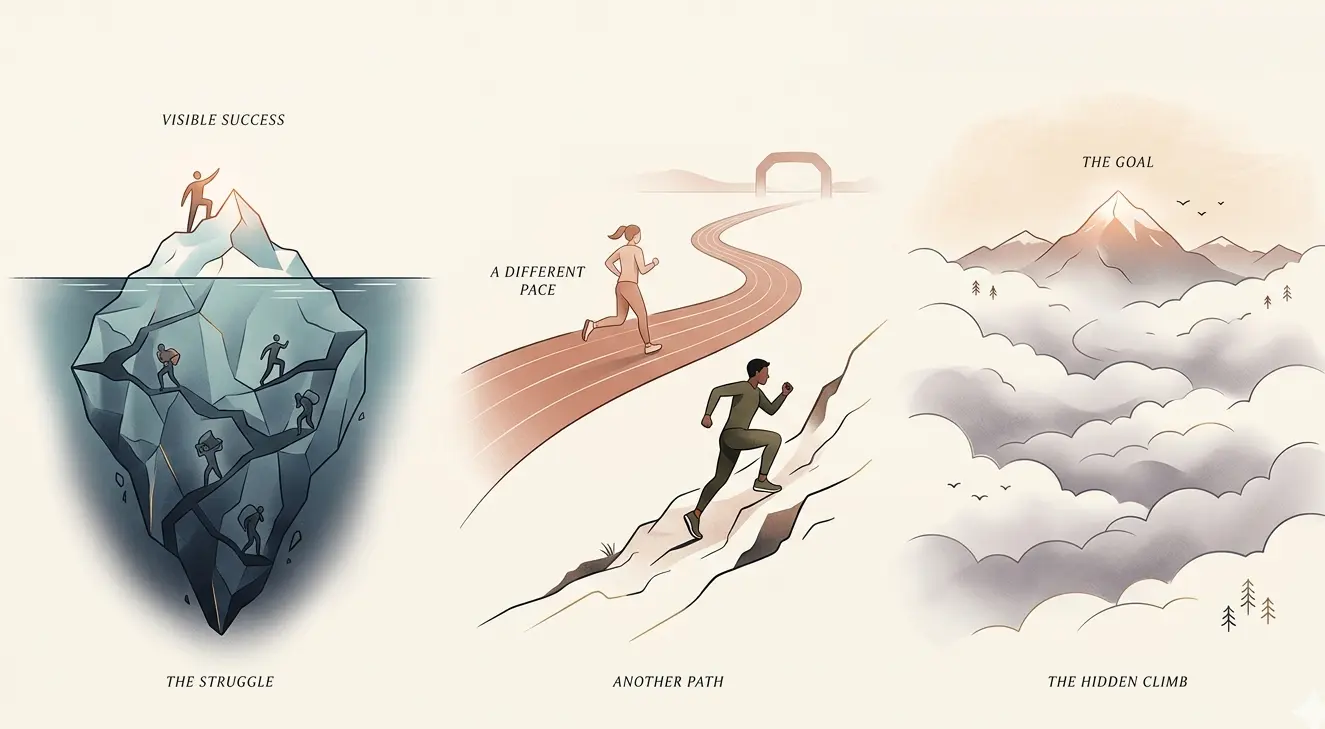
The more I contemplated this, the more challenging it became to overlook. A single success shared online typically symbolizes months or even years of hard work that we often don't see. We observe the result, but seldom the uncertainty, rejection, setbacks, or determination that led up to it.
Nevertheless, our minds start to fill in the gaps. Without being aware of it, we may begin to measure our everyday experiences against another person's exceptional achievement. The comparison is rarely fair, but it feels real enough to influence how we view our own progress.
Maybe that's why just a few moments spent online can occasionally make us feel like we’re lagging behind, when in truth we are merely viewing a thoughtfully curated glimpse of another person's narrative.
Negative Content Always Wins
In my view, it is not just the success stories but also the bad news at which we stop at.
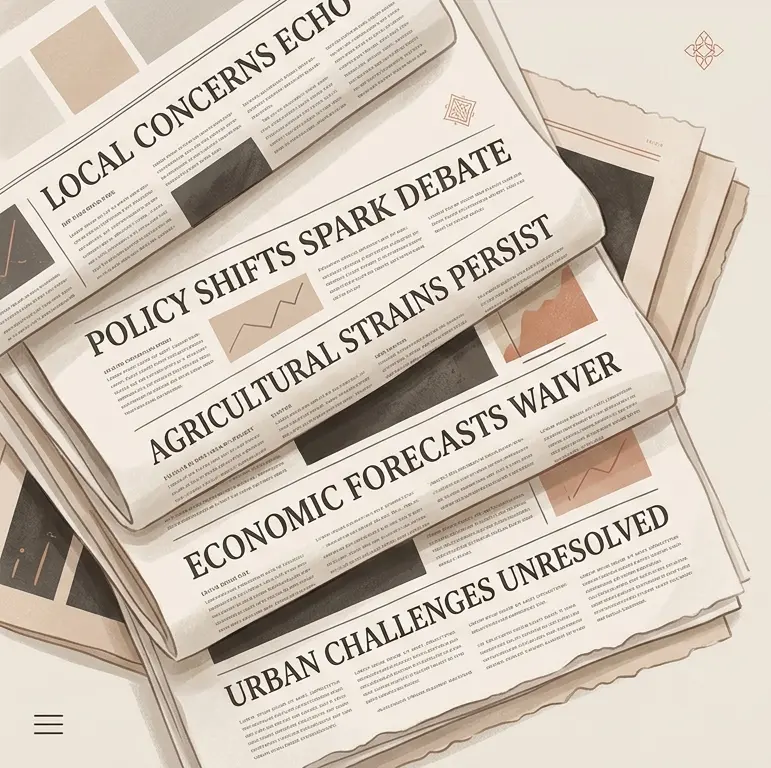
A layoff announcement. Economic disruption. Relationships drama. Predictions about AI replacing more jobs, etc.
Amongst all the online talks, negative content often holds our attention the longest. Part of the reason lies within us. Long before algorithms existed, newspapers operated on a simple principle: "If it bleeds, it leads." Stories involving conflict, crisis, uncertainty, or danger were more likely to make the front page because they attracted readers. Social media did not invent this tendency; it simply automated and amplified it.
Which makes me wonder: are we staying informed, or are we merely staying worried?
The two can look surprisingly similar.
Hidden Cost of “Just 5 Minutes”
Perhaps the most fascinating part is that scrolling is free but attention is never without a cost. A few minutes turn into thirty. Thirty quietly becomes an hour. Before we realize it, we have traded away time that could have been spent resting, learning, focusing, or simply being present with the people around us.
Economists call this opportunity cost - the value of what we give up when we choose one thing over another. Which makes me wonder: if our weekly screen time arrived as an investment statement, would we be satisfied with the returns?
It is an uncomfortable question, but perhaps that is precisely why it deserves to be asked.
To Keep Coming Back
The answer, I suspect, is not a lack of discipline. Maybe for most of us, it is the presence of possibility each time we refresh our feed. A possibility of an exciting opportunity, or some message we have been waiting for or a piece of information that feels useful and rewarding. Often, there isn’t any.
However, there is always an “every now and then”, and that uncertainty is what keeps us coming back. In many ways, scrolling resembles buying a lottery ticket. The reward is unpredictable, but the possibility of finding something valuable with the next refresh is enough to keep us searching.
The reward is uncertain, but uncertainty itself can be remarkably compelling.
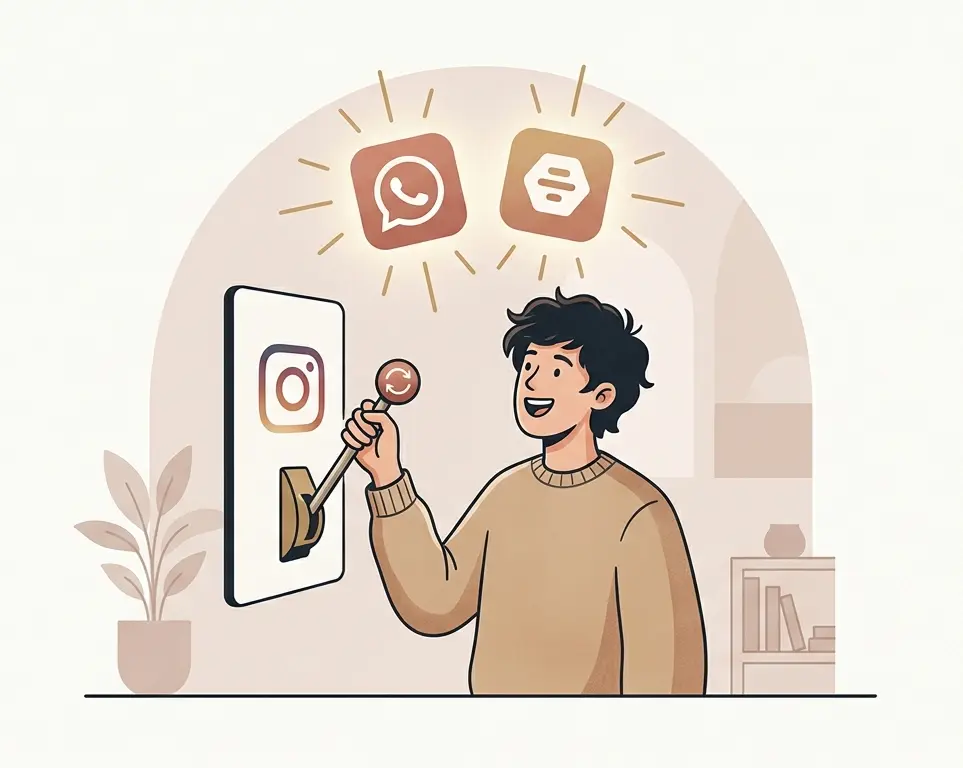
A Better Question
After reflecting on all of this, I do not believe the solution is deleting every app, abandoning technology, or blaming social media for every distraction in our lives. After all, these platforms can educate, connect, entertain, and even inspire. Some of the most valuable opportunities, ideas, and conversations I have come across were discovered online.
The issue, then, is not the technology itself. It is how easily we forget that our attention is limited.
The attention economy will keep expanding. Algorithms will be becoming more adept at figuring out what draws us in, holds our attention, and encourages us to stay a bit longer. These platforms' motivations are unlikely to alter very soon.
Our awareness, however, is subject to change.
The more I considered this, the more I understood that attention is more than just a resource; it influences our time management, learning, emotions, and, eventually, our identity. Maybe that's why this question is so important, not whether social media is beneficial or detrimental.
Whether we are actively directing our focus or subtly letting something else make that decision for us? What do you think? Do let us know in the comments!
Why do I keep opening social media when I know it's just going to make me feel insecure?
You are chasing the unpredictable thrill of finding something interesting, very much like pulling the lever on a slot machine. Even if ninety-nine percent of what you see makes you anxious, that tiny chance of seeing a great post or a message keeps you hooked. It is not a lack of willpower, but rather a biological response to uncertain rewards.
How can I stop comparing my normal daily life to everyone else's big wins online?
Remind yourself that you are comparing your behind-the-scenes struggles to someone else's carefully curated highlight reel. They are sharing a single peak moment that took months or years of hidden failures to achieve, which is never a fair comparison to your average Tuesday. Try to focus on your own unique timeline and goals instead of measuring yourself against an incomplete story.
Why does negative news and drama always seem to grab my attention first?
Our brains are naturally wired to pay attention to danger and conflict to keep us safe, a survival mechanism that algorithms now exploit to keep us online. Platforms amplify things like layoffs or crisis stories because they know anger and worry generate the highest engagement. Recognizing this trick can help you step back and ask if you are staying informed or simply staying anxious.
Do I really have to delete all my apps to get my focus back?
Absolutely not, because these platforms still offer genuine value, connection, and opportunities. The trick is to shift from mindlessly consuming to actively choosing where your attention goes. Try setting simple boundaries, like designated check-in times, so you are the one deciding when to engage rather than letting an algorithm decide for you.