
If your chest is tight right now and you landed here mid-spiral, skip the intro. Go straight to the first section. Come back for the rest later.
For everyone else, let's start here.
Anxiety is not a character flaw. It is not you being dramatic, weak, or broken. It is simply your nervous system doing exactly what it was built to do, just at the wrong volume and over something that definitely isn't a tiger.
I spent the better part of two years living in that high-alert state. Racing thoughts at 2 AM, a heart rate that spiked over a simple email, and a body that felt constantly braced for impact for no clear reason.
Things shifted when I stopped treating anxiety like an unexplainable mystery and started treating it like a system. Every system has inputs, feedback loops, and levers you can actually pull once you know where to look.
This post is that practical toolkit: fast resets for right now, daily habits to lower your baseline, and a simple mindset shift for the long haul.
How To Stop Anxiety Fast: The First 5 Minutes
When a wave of anxiety hits, you don't need deep theory. You need practical tools that work in under a minute. Here are four techniques, ordered from immediate physical resets to mental grounding.
1. Control your breath before anything else
Your breath is the most direct bridge to your autonomic nervous system. It is the one part of the stress response you can consciously override in real time.
The fastest method available is the physiological sigh, a double-inhale technique popularized by Stanford neuroscientist Dr. Andrew Huberman that is grounded in respiratory physiology.
How to do it:
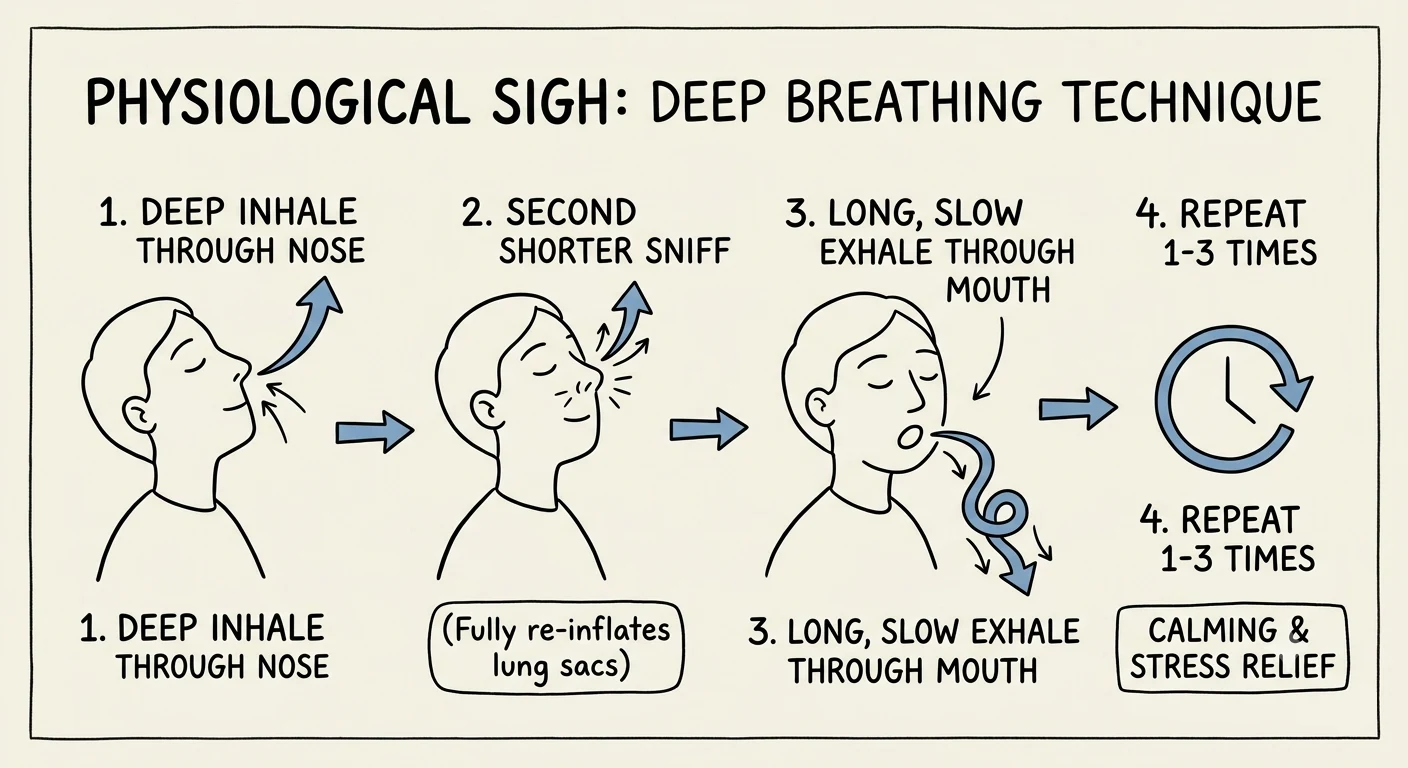
- Take a deep inhale through your nose.
- Take a second, quick sniff right at the top to fully expand the air sacs in your lungs.
- Release everything through a long, slow exhale through your mouth.
- Repeat 2 to 3 times.
That is all it takes. The extended exhale stimulates the vagus nerve, sending an immediate physical signal for your heart rate to slow down.
2. Move to a structured breathing exercise
If a few sighs do not fully ground you, transition to box breathing. This structured cadence is used in high-stress environments to restore focus under pressure.
Repeat this box pattern for 4 or 5 cycles. If your attention drifts, simply bring your focus back to counting the seconds.
3. Use cold water as a physical reset
When thoughts move faster than your breathing can catch up, shift to a physical stimulus. Cold water triggers the mammalian dive reflex, an automatic physiological response that rapidly slows your heart rate.
- Splash cold water directly on your face, targeting your cheekbones and eye area.
- Hold an ice cube in your palm for 30 seconds if a sink is not nearby.
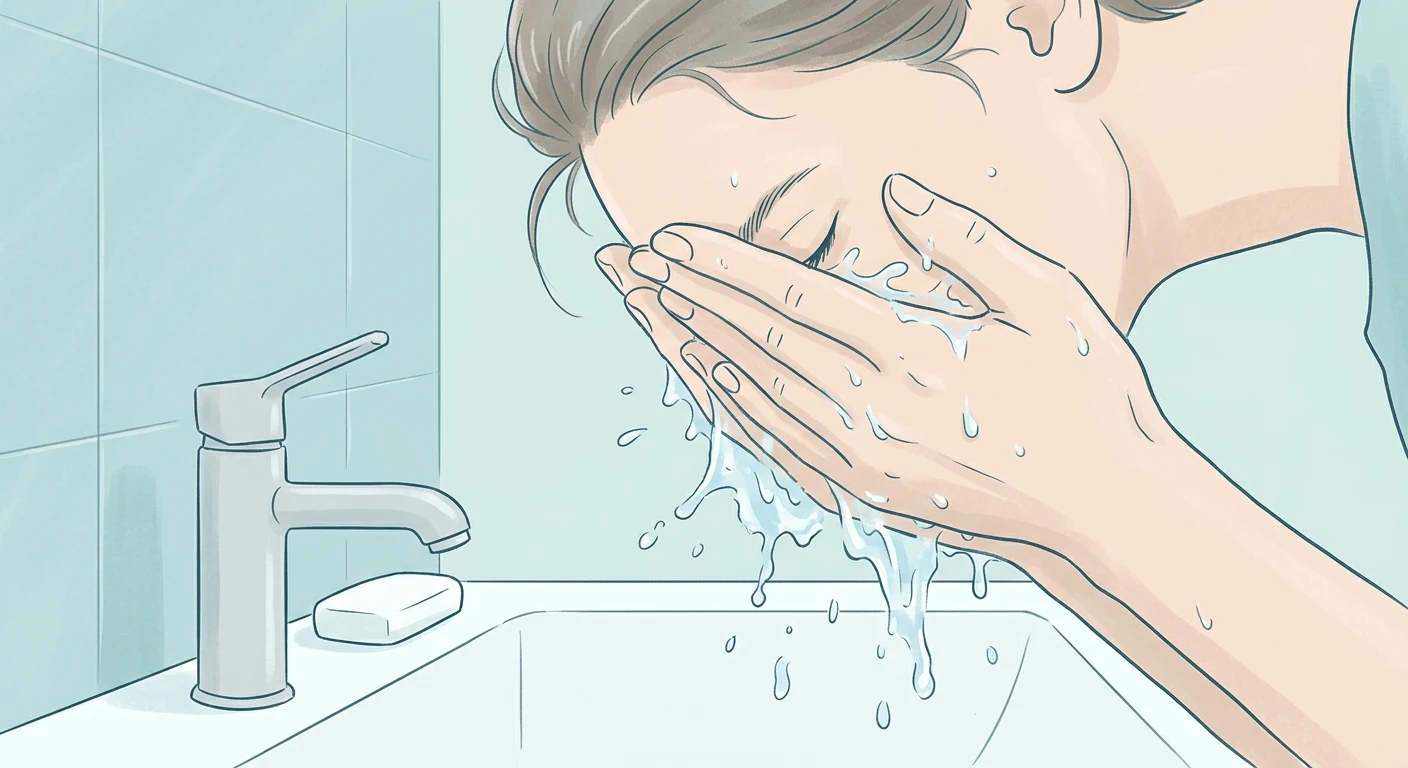
This isn't a distraction tactic. It is a hardwired physical mechanism that interrupts the nervous system's alarm state instantly.
4. Ground yourself with the 5-4-3-2-1 method
Anxiety pulls your attention into mental loops about the future. Sensory grounding forces your mind back into your immediate physical space.
Identify these items around you:
- 5 things you can see
- 4 things you can physically feel
- 3 things you can hear
- 2 things you can smell
- 1 thing you can taste
Simple sensory awareness forces your brain to reallocate cognitive bandwidth away from internal panic and back to external observation.
The objective during an acute surge is not to achieve total calm immediately. It is simply to step out of fight-or-flight so you can think clearly again.
What Causes Overthinking At Night, And How Do You Stop It?
Nighttime anxiety usually happens because quiet environments leave space for unaddressed thoughts to surface. Trying to force yourself to stop thinking often backfires. A more effective strategy is giving those thoughts an immediate destination outside your head.
Use a nocturnal brain dump. Keep a notebook on your nightstand. When a thought starts looping, write it down unfiltered. Externalizing the thoughtsignals to your mind that the information is stored safely, allowing the mental loop to disengage.
Building this quick ritual into your evening routine can drastically reduce the time you spend lying awake.
Daily Habits That Actually Lower Anxiety
Immediate techniques manage acute spikes, but relying solely on quick fixes means constantly reacting to symptoms. Establishing baseline lifestyle habits lowers overall reactivity over time.
Focus on these fundamental daily adjustments:
- Maintain a consistent sleep schedule. Disrupted sleep directly elevates stress hormones. Keep your bedtime and wake-up times stable throughout the week.
- Set a caffeine cutoff time. Avoid caffeine after 12 PM. Caffeine stimulates adrenaline, mimicking physical anxiety symptoms like elevated heart rate and restlessness.
- Incorporate 20 minutes of daily movement. Moderate exercise helps process accumulated stress hormones like cortisol, helping your body return to equilibrium.
- Structure your media consumption. Limit continuous news and social media consumption to dedicated windows rather than checking throughout the day.
- Keep blood sugar stable. Drops in blood sugar trigger adrenaline releases that feel identical to anxiety surges. Regular meals keep these fluctuations in check.
These foundational habits may seem basic, but consistent execution produces meaningful long-term stability.
How Do You Reframe Anxious Thoughts Long-Term?
Reframing thoughts is the process of evaluating whether a cognitive reaction is objectively accurate. Anxious responses operate like an oversensitive alarm system, treating potential possibilities as immediate crises.
Applying cognitive reframing helps evaluate these automatic thoughts logically.
When an intrusive thought arises, run it through these three questions:
- Is this thought an established fact, or an unproven scenario?
- How would I evaluate this situation if a friend brought it to me?
- Based on past experience, what is the most realistic outcome here?
Pausing to question intrusive thoughts breaks the automatic reaction cycle. Stepping back to ask, "Is this accurate right now?" often reveals that the actual risk is significantly smaller than the emotional response suggests.
You do not have to accept every automatic thought as an absolute truth. Recognizing that distinction changes everything.
Cognitive reframing is not about artificial optimism. It is about grounding your perspective in objective reality rather than heightened emotion.
Building A Life Where Anxiety Has Less Room
Managing symptoms and adjusting daily habits addresses key aspects of anxiety, but environmental context matters just as much. Reducing systemic stressors in your environment decreases baseline friction.
Stress typically accumulates in three primary areas:
- Unresolved tasks and communication (delayed decisions, difficult conversations, or pending obligations)
- Overextended scheduling (calendars lacking buffer time or rest breaks)
- Social isolation (spending more time consumed by digital feeds than meaningful real-world interaction)
Prolonged periods of heightened stress can frequently be traced back to friction in one of these areas. While biological predisposition plays a role, environmental pressures significantly amplify stress responses.
Proactively managing your schedule, addressing open loops, and maintaining real-world connections prevents background pressure from mounting in the first place.
You Get To Take The Wheel Back
Eliminating stress responses entirely is neither realistic nor necessary. Seeking permanent, complete calmness often creates its own unnecessary pressure.
A far more practical approach is developing a reliable system: targeted techniques for immediate relief, solid daily habits to maintain stability, and logical evaluation to process intrusive thoughts effectively.
You have far more control over your physical and mental environment than an anxious moment makes it seem.
The goal isn't to eliminate stress completely. It's learning how to steer through it effectively.
Why does my brain wait until I am trying to sleep to start racing?
Because the quiet of your bedroom leaves too much empty space for unaddressed thoughts to surface. Write them down in a nightstand journal to signal to your brain that they are stored safely. This simple externalizing trick breaks the mental loop and allows your mind to finally settle down.
How does splashing cold water on my face actually stop a panic attack?
Shock your system into calming down by activating the mammalian dive reflex, which physically forces your heart rate to drop. Splashing ice-cold water on your face or holding an ice cube instantly interrupts your body's alarm state. It is a biological override that works in seconds, not just a mental distraction.
Do I really have to give up coffee if I have anxiety?
Limit your caffeine to the morning hours instead of giving it up completely. Caffeine triggers adrenaline, which physically mimics the exact feeling of an anxiety attack. A strict noon cutoff lets you enjoy your brew without fueling late-day panic.
How do I stop believing every single worst-case scenario my brain cooks up?
Run those thoughts through a logical reality check before letting them spiral. Ask yourself if the worry is a proven fact or just an unproven scenario, and how you would advise a friend in the same spot. Stepping back helps you realize the actual risk is almost always much smaller than the emotional panic suggests.