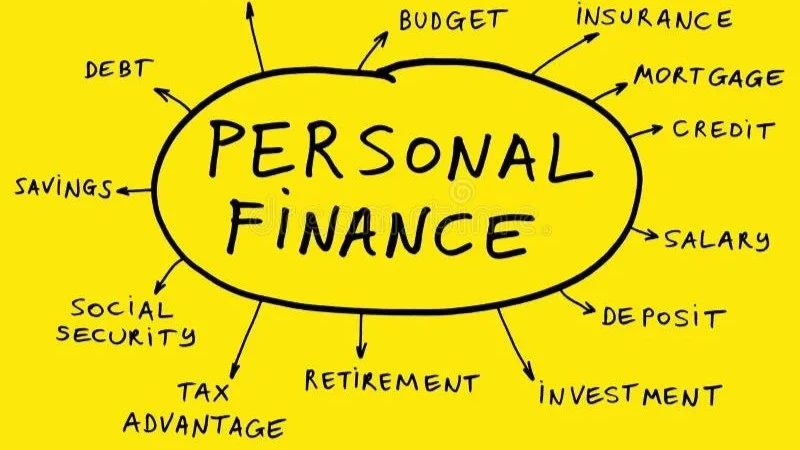

If you're reading this, chances are money has started feeling a little more real lately.
Maybe you got your first paycheck. Maybe you're stretching a monthly allowance, paying for college expenses, or realizing that rent, groceries, and random subscriptions somehow add up faster than expected. At some point, money stops being something adults talk about and becomes something you have to figure out yourself.
The strange part? We're expected to manage it without ever really being taught how.
Personal finance has a reputation for being full of complicated terms and investment advice, but at its core, it's much simpler than that. It's about understanding where your money goes, making choices that future - you won't regret, and building habits that make life a little less stressful.
This isn't a guide for people who already have everything sorted out. It's for anyone who's trying to make sense of their finances without feeling intimidated. Let's start with the basics.
Why Personal Finance Matters? 🤔
You're making financial decisions right now.
Every purchase, every decision to save (or not save), every loan you take - these aren't just transactions. They're investments in your future. A decision you make today affects where you'll be in 5, 10, or 20 years.
Here's what most people don't realize until it's too late:
- Compound growth works both ways. A small amount of money invested consistently can grow into something substantial over time. Conversely, small debts can snowball into overwhelming burdens. A ₹100 coffee every day might seem harmless, but that's ₹36,500 a year - money that could have been invested, saved, or used for something meaningful.
- Financial stress is real. Studies consistently show that money-related stress is one of the leading causes of anxiety, depression, and relationship problems. By building financial awareness now, you're not just securing your future; you're protecting your mental health and relationships.
- Opportunity requires preparedness. Life throws you curveballs - unexpected job offers in new cities, a chance to start a business, or the sudden need for emergency medical care. Having financial literacy and a safety net means you can actually seize opportunities instead of being crushed by obstacles.
- Time is your greatest asset. As a student or young adult, you have something most people would trade everything for: time. The earlier you start, the more compound growth works in your favor.
The Foundation: Understanding the Basics 😧
Before diving into strategies, let's establish a solid foundation with core concepts.
1. Income vs. Expenses: The Central Equation 💸
Personal finance boils down to one simple truth: you can't spend more than you earn (at least not sustainably).
Income: Money coming in (salary, part-time work, allowance, gifts)
Expenses: Money going out (rent, food, transportation, subscriptions)
The gap between these two is where your power lies.
Why this matters: If you earn ₹30,000 a month and spend ₹32,000, you're going backwards. By ₹24,000 a year. In five years, that's ₹120,000 in unnecessary debt. But if you flip it and spend ₹28,000, you suddenly have ₹2,000 to work with - ₹24,000 annually, ₹120,000 in five years. Same income. Completely different trajectory.
2. The Three Money Buckets 💰
Think of all your money as flowing into three buckets.
- Bucket 1: Expenses (Essential Living Costs) These are non-negotiable costs: rent/housing, food, transportation, utilities, insurance. These typically account for 50-60% of your income as a student.
- Bucket 2: Savings (Your Financial Security) This is your emergency fund - money set aside for unexpected events (medical emergency, job loss, urgent home repair). Aim to save 20-30% of your income here initially.
- Bucket 3: Wants (Discretionary Spending) Entertainment, dining out, hobbies, non-essential purchases. This should be 10-20% of your income. This is your guilt-free spending zone - because you've already taken care of buckets 1 and 2.
The key insight? You prioritize in order: Expenses → Savings → Wants. Not the reverse (which is what most people do).
3. The Concept of Delayed Gratification 🏃➡️
Your brain is wired to want things now. Immediate pleasure is powerful. But here's what separates financially successful people from others: the ability to choose delayed gratification.
When you see something you want, pause and ask: "Do I want this more than I want financial freedom?" Often, the answer is no. That expensive dinner tastes good for 2 hours; financial security lasts a lifetime.
This doesn't mean never treating yourself. It means being intentional about it - spending money on things that genuinely matter to you, not just reflexively.
The Four Pillars of Personal Finance 🕯️
Pillar 1: Tracking & Budgeting ⏭️
You can't manage what you don't measure.
Start Here:
- For the next month, track every single rupee you spend. Use a notebook, a spreadsheet, or an app - doesn't matter. Just be honest.
- At the end of the month, categorize your spending: Food, Transportation, Entertainment, Shopping, Utilities, etc.
- Look at the numbers without judgment. This is just information.
What you'll discover: Most people are shocked to see where money actually goes. That coffee, those small subscriptions, impulse purchases - they add up.
Create a simple budget: A budget isn't restrictive; it's empowering. It's a plan for your money. A basic approach:
- List your monthly income
- List your fixed expenses (rent, insurance, loan EMIs)
- Allocate money to savings (even ₹1,000/month is better than zero)
- Allocate remaining money to variable expenses and wants
- Track actual spending against the budget
Pro Tip !
Budgeting Tools: Simple spreadsheet (Excel / Google Sheets - download a budget template) / Apps like Money Manager, Walrus, or Mint / Even a notebook works if you're consistent
The goal isn't perfection. It's awareness and intentionality.
Pillar 2: Emergency Fund (Your Safety Net) 🚨
Life happens. Your bike breaks down. You lose your part-time job. You need unexpected medical care.
An emergency fund is money set aside specifically for these situations - money you don't touch for lifestyle spending.
How much do you need? As a student or fresher, start with ₹10,000-25,000 (3-6 months of essential expenses). This might seem like a lot, but here's why it matters: without this safety net, a small crisis becomes a crisis of debt.
Where to keep it:
- A separate savings account (not your daily account)
- A high-interest savings account (currently earning 4-6% in India)
- Liquid, accessible, but "out of sight"
The psychology of an emergency fund: Knowing you have this money reduces anxiety significantly. And paradoxically, once you have it, emergencies rarely happen because you're no longer stressed and making poor decisions.
Pillar 3: Smart Spending Habits 👓
This isn't about being cheap. It's about being smart.
Distinguish between needs and wants:
- Need: Something essential for survival or function (food, shelter, transportation to school/work)
- Want: Something nice-to-have but not essential (premium coffee, latest phone, designer clothes)
The 30-day rule: Before buying anything over ₹1,000, wait 30 days. If you still want it after 30 days, consider it. (Spoiler: most impulse purchases disappear from your mind by day 10.)
Subscription audit: Go through your bank statements and list every subscription (streaming services, gym membership, apps, etc.). Most students have 8-12 subscriptions they don't actively use. That's ₹2,000-5,000 monthly down the drain. Cancel what you don't use.
Negotiate and compare:
- Insurance premiums can be negotiated
- Phone plans have different tiers
- Shopping on sale vs. full price saves 30-50%
Avoid lifestyle inflation: When your income increases (new job, raise, bonus), don't immediately increase your spending. Increase your savings rate instead. This is the secret most wealthy people know.
Pillar 4: Introduction to Debt 💲
Not all debt is bad. Understanding it is crucial.
Good debt vs. Bad debt:
- Good Debt: Borrowed money for something that appreciates or generates income.
E.g.: Education loan (if pursuing a valuable degree) / Home loan (real estate historically appreciates) / Business loan (if the business generates profit) - Bad Debt: Borrowed money for consumption that depreciates.
E.g.: Credit card debt for shopping / Personal loan for a vacation EMI for gadgets and clothes
The key difference: Good debt potentially pays for itself. Bad debt costs you money while the asset loses value.
Credit cards for beginners: Credit cards can be powerful tools for building credit history, earning rewards, and managing cash flow. But they're also debt traps if misused.
If you're getting a credit card:
- Set a strict budget for it (e.g., ₹5,000/month)
- Pay off the FULL balance every month (not just minimum)
- Treat it like a debit card with consequences
Pro Tip!
Understanding EMIs: Before taking any EMI (Equated Monthly Installment), calculate the total amount you'll pay back. A ₹50,000 laptop that costs ₹65,000 over a 12-month EMI isn't a good deal. Make this calculation a habit.
Beyond the Basics: What's Next? 🥹
Once you've mastered the foundations (tracking, budgeting, emergency fund, smart spending), you're ready to explore:
- Understanding Investments
- Index funds and mutual funds
- Fixed deposits and bonds
- The power of compound interest over decades
- Risk vs. reward
- Building Credit History
- How credit scores work
- Why it matters (loans, credit card limits, even job applications)
- How to build it intentionally
- Tax Awareness
- Understanding your tax bracket
- Tax deductions and benefits you're eligible for
- Filing taxes correctly (it's not as complicated as it seems)
- Career and Income Growth
- Negotiating salary
- Acquiring high-demand skills
- Side income opportunities
- Career planning for long-term growth
Your Action Plan: 90-Day Challenge 🎬
This is simple but transformative. Use a habit tracker to stay accountable:
Week 1-2: Commit to tracking every expense. No judgment, just data.
Week 3-4: Analyze your spending. Identify 2-3 areas to optimize. Cancel one unnecessary subscription.
Week 5-6: Open a separate savings account. Set up an automatic transfer of ₹500-1,000 on payday.
Week 7-8: Create a detailed budget using the three buckets approach. Share it with a trusted friend for accountability.
Week 9-10: Read one book or watch 5 videos from the recommended resources.
Week 11-12: Reflect on changes. Celebrate small wins. Plan your next financial goal.
By the end of 12 weeks, you won't just have read about personal finance - you'll have lived it. You'll have built habits that compound over years.
The Bigger Picture: Financial Independence 🤑
All of this; tracking, budgeting, saving, investing - points to one powerful goal: financial independence.
Financial independence doesn't mean being rich. It means: Not stressing about money, having choices (you can quit a job you hate), being prepared for emergencies, investing in your future without guilt & helping others without sacrificing yourself !
The path to financial independence starts with one step: deciding that you deserve financial security and that it's worth the effort.
Final Thoughts 🫡
Personal finance comes down to two things: understanding where your money goes and making intentional choices about what to do with it.
This doesn't require being exceptional at math or coming from a rich family. It requires awareness and consistency.
The best time to start was 10 years ago. The second best time is today. Small actions now will ripple into decades of compounding.
This guide gives you the foundation. The rest is up to you. Attached some recommendations for the readers who actually held up with me till the end !
My Recommendations 😌
- Books
- "Rich Dad Poor Dad" by Robert Kiyosaki - A foundational read that reshapes how you think about money and assets
- "The Simple Path to Wealth" by JL Collins - Practical, no-nonsense approach to building wealth
- "The Intelligent Investor" by Benjamin Graham - A classic on investment principles (challenging but worth it)
- Blogs & Websites
- Personal Finance Community India - Local insights and tax-specific information for Indian students
- Mr. Money Mustache - Philosophy-driven approach to money and early financial independence
- Bogleheads Forum - Community for index fund investors (excellent for learning)
- Youtube Channels
- Ankur Warikoo - Personal development and finance for Indians (accessible and motivating)
- Two Cents by CNBC - Short, engaging explainers on financial concepts
- Graham Stephan - Deep dives into investment strategies and wealth building
Is it realistic to save 20% of my money when I'm barely getting by on a student budget?
Start small and don't stress about hitting that target percentage right away. Even setting aside 500 or 1,000 rupees a month builds the crucial habit of paying yourself first. The consistency of saving matters far more than the initial amount.
Where exactly should I keep my emergency fund so I don't accidentally spend it?
Keep it in a separate high-interest savings account that is completely disconnected from your daily spending card. This keeps the money safe, out of sight, and earning a bit of interest, while remaining accessible if a real emergency hits.
Should I get a credit card to build my credit score, or is it too risky?
Get one only if you can commit to treating it like a debit card and paying off the full balance every single month. It is a fantastic tool for building credit history, but it becomes a dangerous debt trap the moment you use it to buy things you cannot afford.
What is the easiest way to cut back on spending without feeling like I'm missing out on fun?
Run a quick audit on your active subscriptions and cancel the ones you do not actively use. You can also use the 30-day rule for non-essential purchases over 1,000 rupees to curb impulse buys, leaving you plenty of guilt-free cash for your actual "wants" bucket.