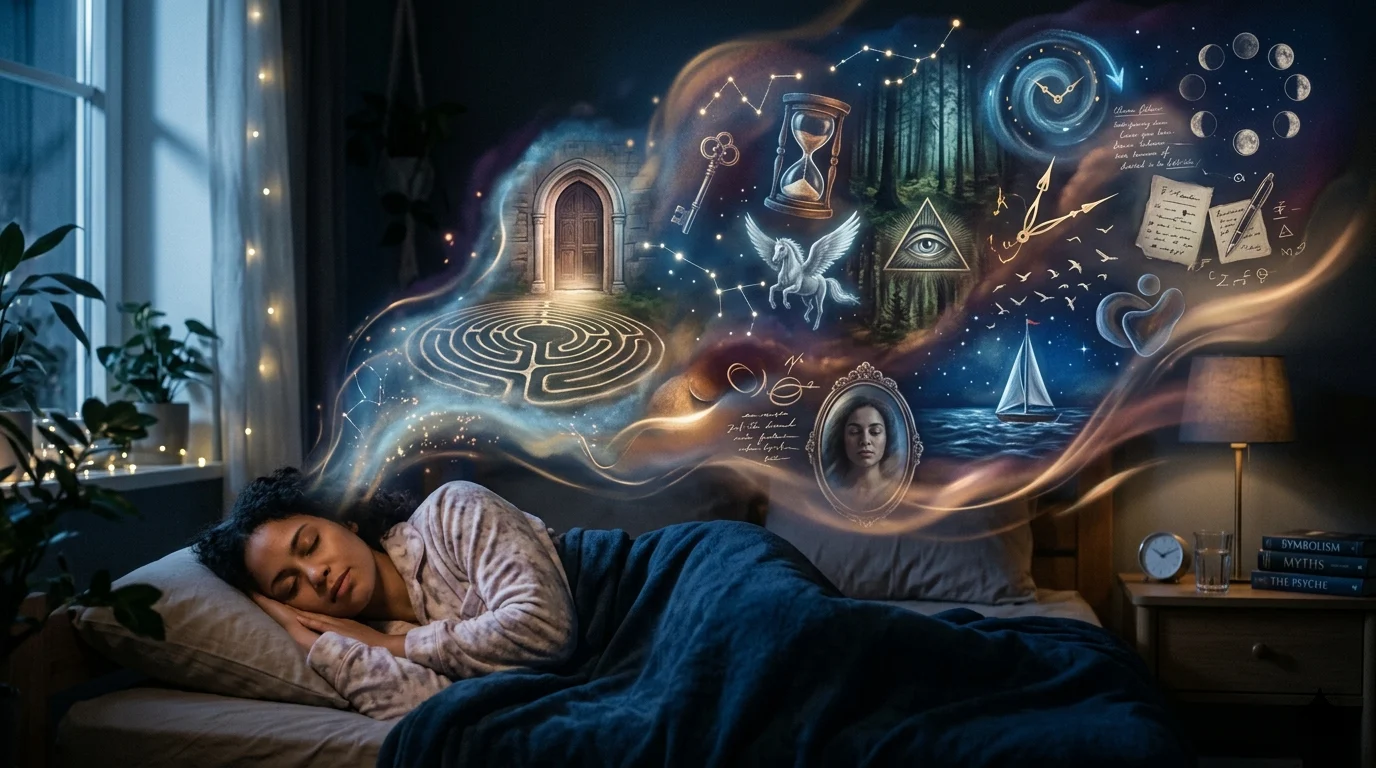

Did you know that we spend almost six years of our lives in dreams?
Still, many of us disregards dreams as just some random images with no significance. We sleep, see dreams, wake up and forget them the very next day and move on in life, assuming they have no connection to our real lives.
But what if I tell you that dreams are not as meaningless as they appear and they do have a meaning? What if those strange scenes and emotions are trying to tell us something in a language, we don’t usually pay attention to? For centuries, humans have tried to understand the mysteries of the brain, and dreams remain one of its most challenging puzzles.
If this topic sparks your curiosity, then stay with me till the end of this blog and we will explore some of the intriguing mysteries behind our dreams together.
The Anatomy Of Dreams
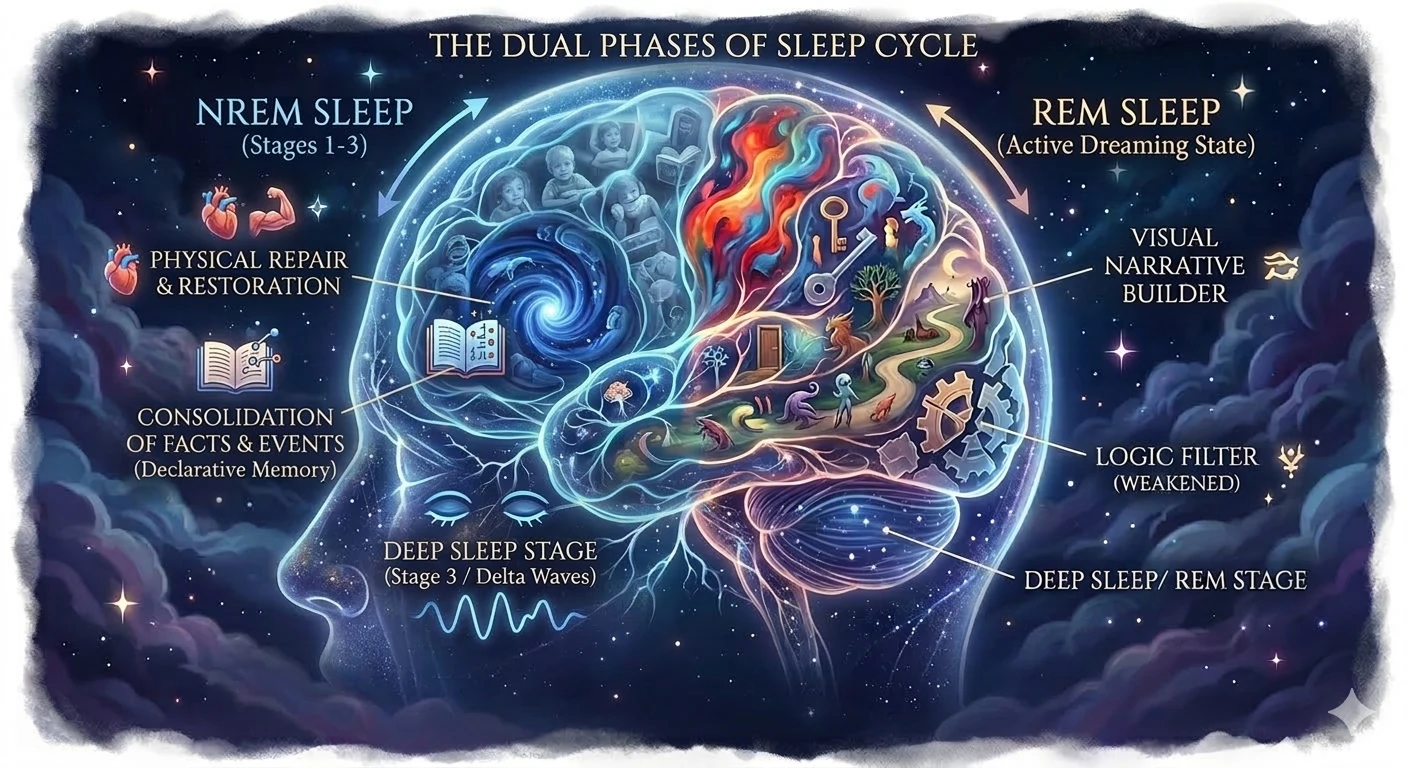
First, lets codify what dreams really are. Dreams are vivid and often illogical experiences that we encounter in sleep. They comprise of images, emotions, and sensations that feel very real. They seem like a different world where no rules of logic, right or wrong exist.
There are broadly 2 phases of sleep REM (rapid eye movement) AND NON-REM.Most of he dreams occur in REM a phase in which our body is temporarily paralyzed but our mind is highly active. These phases work in a cycle in which NON-REM is followed by REM in appropriate intervals of time because of which we do not experience dreams whole night rather we see them in proper intervals.
Surprisingly, our brain revisits these unresolved or unprocessed emotions during sleep and try to express them through symbolic images or visuals in our dreams.
For example, the suppressed feeling of fear of failing an exam wont come in dreams as exam related visuals instead come as situation reflecting panic, loss of control or being unprepared like haunted dreams or car’s break fail because our prefrontal cortex (logical area) is less active and our emotional memory is taking the charge during sleep. These visuals help the mind to process that suppressed emotion of fear.
Why Do We Dream?
The most important question that we all go through at least once in our lifetime. “Why do we dream”?
From a very long time many scientists have tried interpret the logic behind those illogical imagery and experiences that we encounter during sleep. Many theories came to the surface which suggests that dreams play an important role in many integral mental processes like emotional processing, memory consolidations, threat simulation etc.
Throughout the day We humans experience different kind of emotions like fear, anxiety, excitement, stress etc. but most of the time we fail to process them completely due to logic, distractions or avoidance.
Surprisingly, our brain revisits these unresolved or unprocessed emotions during sleep and try to express them through symbolic images or visuals in our dreams.
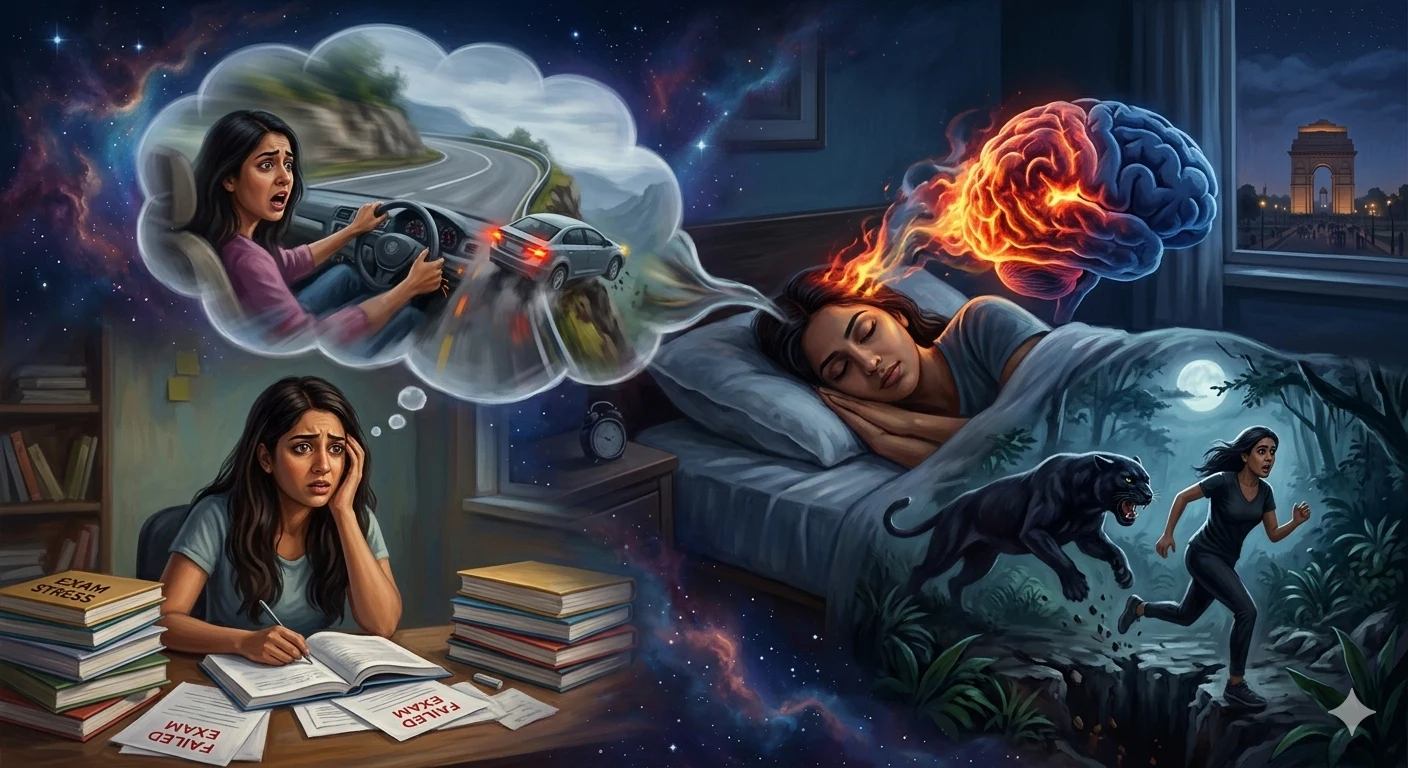
For example, the suppressed feeling of fear of failing an exam wont come in dreams as exam related visuals instead come as situation reflecting panic, loss of control or being unprepared like haunted dreams or car’s break fail because our prefrontal cortex (logical area) is less active and our emotional memory is taking the charge during sleep. These visuals help the mind to process that suppressed emotion of fear.
Apart from emotional processing, some theories also suggest that dreams can also be seen as threat simulation mechanism. In the beginning of the human race, people faced many threats from predators, natural calamities, social exclusions etc. due to this excess of danger our brain developed a mechanism to simulate dangerous or threatening situations in our dreams to help us to rehearse our response system and to prepare us mentally. And this is why most of our dreams are based on being chased, falling, loosing control etc.
Though all the above-mentioned reasons are not fully accepted by the world. They are just those interpretations which are widely agreed upon.
Common Dream Patterns

You would be thrilled to know that many reports suggest that most of the people even of entirely different subcontinents encounter similar patterns of dreams. This tells us that environmental factors do not play a huge role in the formations of those nighty visions, rather they are connected to something which is common in us and that element is OUR EMOTIONS. Let’s try to analyze those common patterns
The first pattern is being chased. Many of us see dreams in which we are running or escaping from someone unknown. Experts believe that these types of visions could be a sign of avoidance of a problem, responsibility or fear in your real life.
The second pattern I want to share is dreams about falling. We often encounter dreams in which we are about to fall from a building, terrace, mountains or an elevated place. This haunts us so badly that it sometimes wake us up in the middle of the night. These kinds of dreams often reflect the feelings of insecurity, uncertainty or loss of control. our brain’s way to cope up with the stress we are taking in real life
The third pattern is a bit interesting as it is about dreams about flying. Sometimes we go through dreams In which we are flying which usually makes us feel good unlike the dreams of being chased and falling. Visions like these are often linked to the feeling of excitement, personal growth or an ambition to break free from the unnecessarily limitations.
The last pattern I want to point out is dreams based on being unprepared for an important event which include visions like becoming later for an important flight, forgetting special days etc. this type usually come to the surface during stressful phases in life and shows pressure or fear of failure
Can Dreams Predict Future?
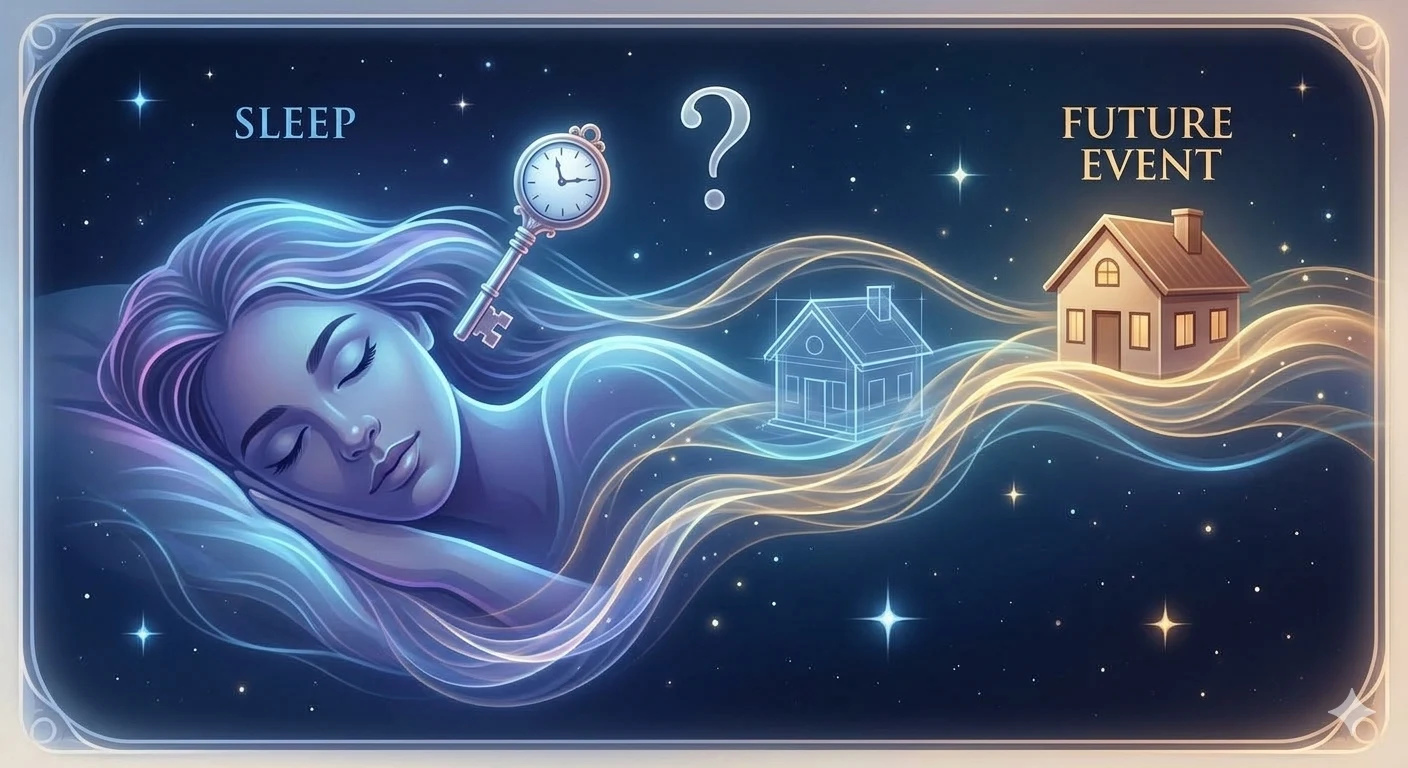
From the beginning of the time many ancient civilizations and cultures saw dreams as a tool to predict future. this was mainly because of lack of scientific temperament, cultural beliefs and coincidence. Well, they were not completely wrong, sometimes dreams do reflect future. it happens not because of any supernatural or divine intervention but because of logic and science.
Throughout the day our brain observes and stores even tiny tiny details. Most of the time we do not think about it actively but our brain keeps that in subconscious. While sleeping it connects all those patterns and possibilities to process and organize the experiences. So future related dreams can be a byproduct of this process. It does feel like a prediction or magic but in reality, it is only pattern recognition
Conclusion
Dreams do have a meaning they do talk but in their own language, the language of symbols. If we observe carefully then it can be a great tool for self awareness. Through different dreamy visions it can aware us about our unresolved feelings and unprocessed thoughts. So,The next time you wake up from a strange and confusing dream, Just don’t simply discard it. Instead think upon it and ask yourself, why did I feel this way?
Why do I keep having those terrifying dreams where I'm falling?
Think of these as your brain's alarm system for stress and uncertainty in your waking life. When you feel like you are losing control or facing insecure times, your subconscious translates that emotional panic into a physical plunge to help you process the anxiety. Try identifying what is making you feel unsupported during your day to help quiet these nighttime drops.
Is it just a coincidence when a dream actually comes true in real life?
It feels like magic, but it is actually your brilliant brain doing some backstage pattern recognition. Your subconscious constantly collects tiny daily details that you do not actively notice, and then pieces them together while you sleep to show you highly likely outcomes. It is not a supernatural power, just your mind being incredibly observant.
Why are my dreams always so incredibly weird and random?
Blame your sleeping prefrontal cortex, which is the logical decision-making part of your brain that powers down during sleep. Since this logic center is inactive, your emotional memory takes the steering wheel and uses strange, symbolic images to process unresolved feelings. That is why a simple real-life fear of failing might morph into a chaotic car crash or a wild chase.