
Imagine you are in a cold and dry midnight peacefully using your phone inside a very warm and comfortable quilt, and you tell yourself, ‘Just one more reel,’ and suddenly an hour has passed and strangely you do not even remember the half of what you have watched. have you even wondered why does it happen? It is not a coincidence or magic it is science actually whenever you scroll your favourite content a chemical called dopamine often known as the “feel good hormone” is released in your brain which provides a feeling of instant pleasure and motivation, which keeps you hooked craving for just one more reel or one more video and we get stuck in the dopamine trap.
The pleasure illusion: How dopamine tricks your brain

Dopamine as I said before is known as feel good hormone and it actually gives you pleasure but that feeling is far away from what real happiness is. This chemical creates anticipation that if we scroll one more reel or get one more notification then maybe we will attain real satisfaction or happiness. This chemical acts like a very clever salesman who convinces us that the real joy is just one more swipe away and we innocent humans buy his pitch again and again.
The loop of endless craving
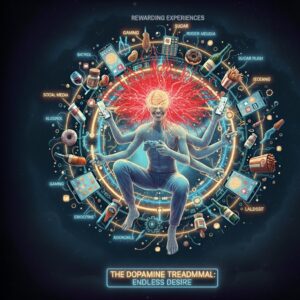
Human brain was never wired for endless pleasure instead it was designed for limited pleasure accompanied by satisfaction and long-lasting happiness but this digital era which offers almost everything at a very fast pace like communication, entertainment etc has made us so ignorant that we have stopped caring about real happiness and just behind pleasure every second and end up being stuck in an endless loop of dopamine.
What happen is that whenever we manage to indulge ourselves in an activity like scrolling a short reel which give us an instant hit of dopamine then it becomes almost impossible for us to stop after one as when this rush disappears our brain instantly craves another. it became a cycle without a finish line. the more we feed it the hungrier it grows the scariest part is that this clever chemical does not give up satisfaction instead it only makes you restless by making you believe that maybe the next reel, the next notification or the next comment will make you feel complete but sadly that time never comes. It’s like drinking salt water to quench your thirst, the more you consume, the thirstier you become.
“The cost of constant pleasure”
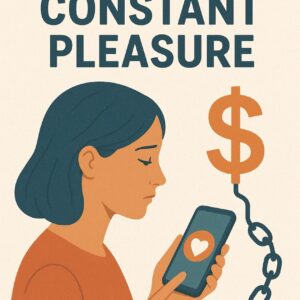
Ladies and gentlemen What if I tell you that our constant effort to feel good is the very reason we feel so empty. let me explain this to you clearly. when we experience moments like scrolling social media, drinking alcohol or even eating junk or sugary food, each time our brain gets flooded with dopamine which seems joyful for short term but slowly our mind begins to confuse this stimulation with real happiness, with time it starts diminishing our ability to experience what true happiness actually means. It is almost like listening to out favourite song on repeat until its magic fades away.
What once amused us now barely sparks a reaction. Now the reel, notification or the like once amused us feels nothing. In chasing a lot, we end up being empty. Well, the good news is this situation is not permanent and can be reversed with consistent efforts.
“Rewiring the Mind: Escaping the Dopamine Trap”
Six months ago, I went to the gym for the very first time. It was a good experience, but it demanded a lot of focus and mind–muscle connection, which made it discomforting and challenging Because of that, I lost consistency — I was going only two or three times a week. But I kept pushing myself, and today, things have completely changed. Every evening, my brain automatically tells me to gear up for the gym, and now I can focus effortlessly.
Wait a minute, what just happened?
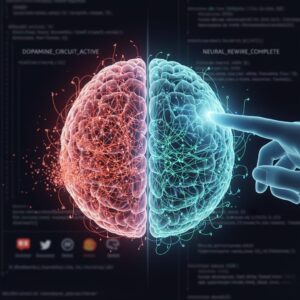
It’s not magic or just a habit change its biology. My brain slowly rewired itself. In the beginning, it was addicted to easy dopamine hits, but over time, it started to accept delayed dopamine, the pleasure that comes after hard work and brings real satisfaction and joy.
This rewiring process is called neuroplasticity, our brain’s ability to form new neural connections. The more we repeat a particular action, the stronger those connections become. This means we can escape the dopamine trap by replacing instant dopamine activities like eating junk food, drinking alcohol, or overusing caffeine with actions that brings delayed pleasure with real satisfaction and peace.
At first it would seem challenging and you’ll face a lot of discomfort and frustration, but with time as your neural pathways strengthen, your craving for instant dopamine hit would reduce and you’ll start feeling calmer, more focused, and genuinely fulfilled.
Remember time, patience, discipline, and never-give-up attitude carry the real weight in this journey.
In the end, escaping the dopamine trap isn’t about quitting pleasure it’s about reclaiming control. The truth is, dopamine isn’t our enemy; it’s our guide that lost its direction in this noisy digital world. Real happiness and peace don’t come from endless scrolling or temporary highs from junk food, alcohol or sugar but from actions that demand effort, patience, and presence, the kind that makes your soul feel alive, not just your brain excited.
I’ve learned that the most peaceful moments aren’t when I get another notification, but when I finish a good workout, read something meaningful, or simply sit in silence. Those moments bring clarity not chaos.
Moreover we would love to hear from you as well, you can also tell us the way you manage your dopamine triggers in the below comments section.