
You’ve got a deadline, opened your laptop, you are ready to complete your assignment today and … somehow, you’re cleaning your room instead.
You know you’re procrastinating, yet you can’t stop. Why does that happen, and more importantly, how do you make it stop?
The Truth About Procrastination
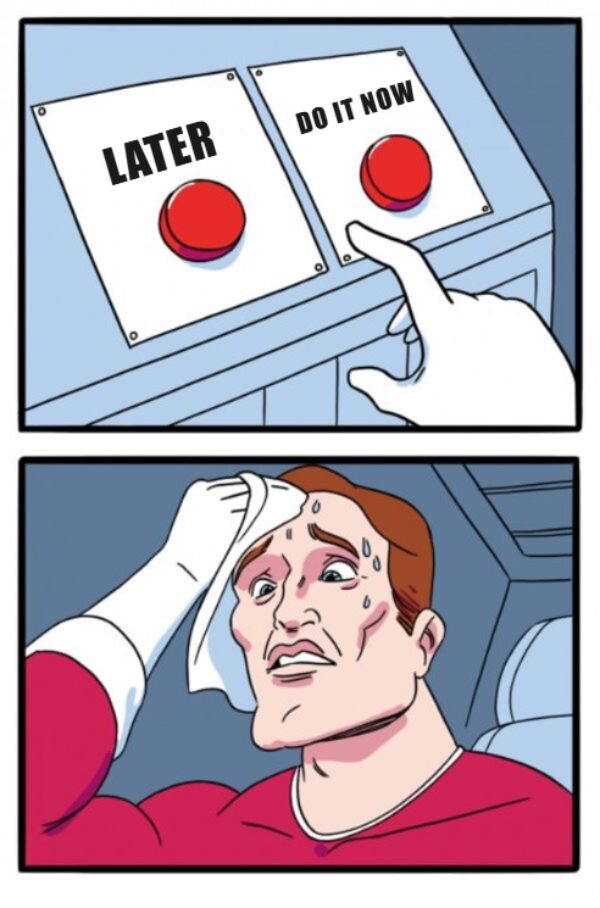
Let’s get one thing straight: procrastination isn’t a disease, it’s not a flaw or a permanent trait.
It’s a series of small decisions, moments when we tell ourselves: “I’ll do it later. It’s not that urgent right now.”
It feels terrible, doesn’t it? Knowing you want to do the task as much as you want to avoid it. It’s like watching yourself press the “delay” button again and again, fully aware of what you’re doing, but unable to stop.
A large 2022 study conducted across multiple Swedish universities surveyed over 700 students about their procrastination habits and mental health. The findings were eye-opening: More than 90% of students admitted that procrastination was a real problem in their lives.
Which proves that procrastination is more about feelings than discipline.
(Source: Frontiers in Psychology, “Procrastination Among University Students: Differentiating Severe Cases in Need of Support from Less Severe Cases,” 2022, read more)
Procrastination Isn’t What You Think
Some might associate procrastination with laziness, but the truth is: you procrastinate not because you are lazy, it’s because “you are scared”.
Procrastination is essentially a tug-of-war between two parts of your brain:
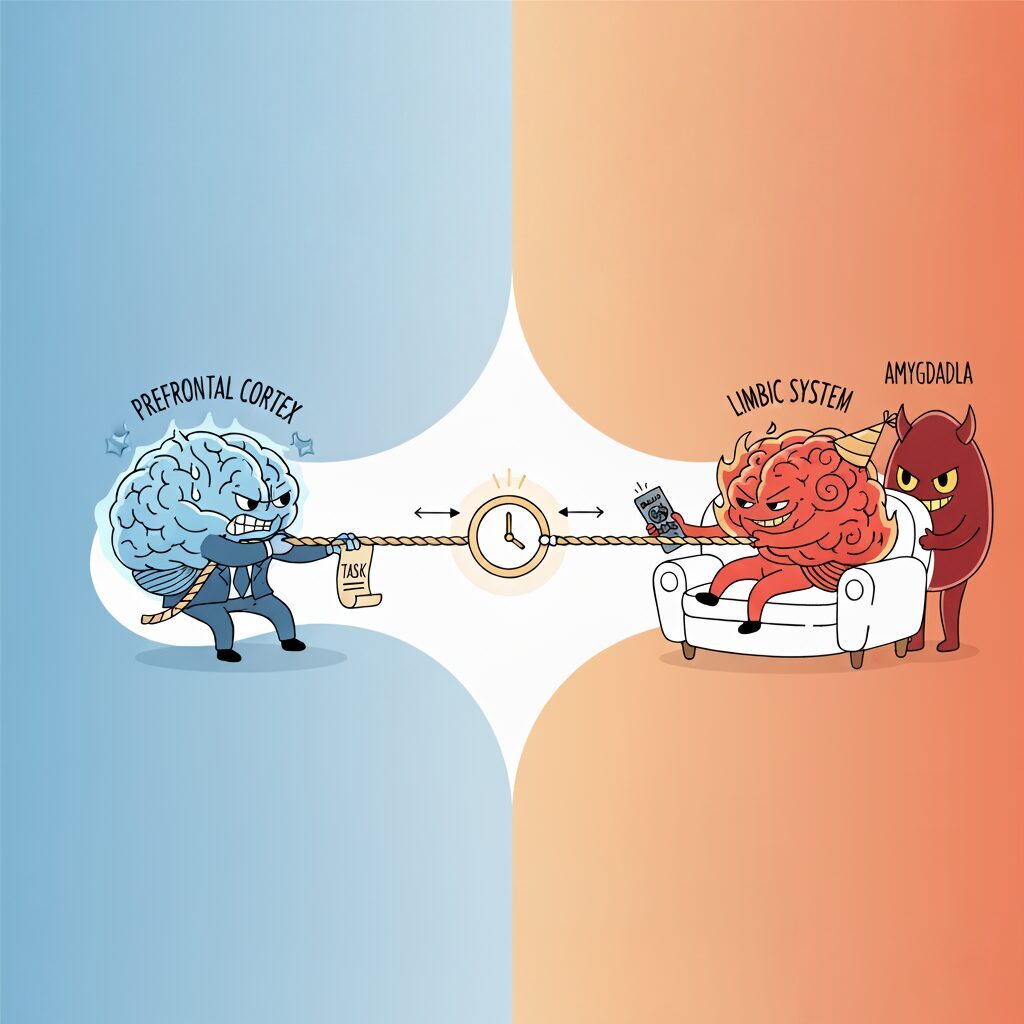
- The Prefrontal Cortex: Which wants to plan, make progress, and act responsibly.
- The Limbic System: Which seeks comfort, safety, and instant gratification.
You procrastinate when your limbic system wins the war. Now, how does it manage to win so often?
The answer lies in a rather deceptive structure in our brains, the Amygdala: the part of your brain that controls fear and anxiety.
When you sit down to work on something challenging, the amygdala interprets that discomfort as danger, to which our brain releases Cortisol, the stress hormone, shutting down your prefrontal cortex, the rational part that helps you make decisions and take action.
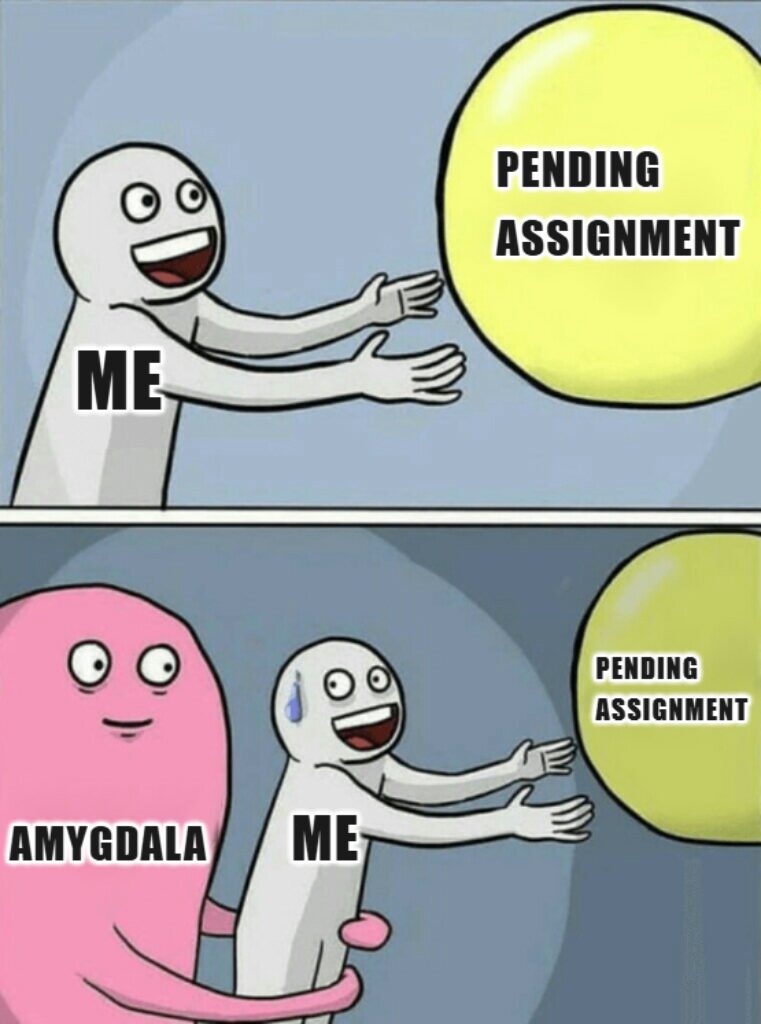
That’s when the limbic system takes over, suggesting the brain: “Let’s just do something else. You’ll feel better after.”
And before you know it, hours have passed.
Lorem ipsum dolor sit amet, consectetur adipiscing elit. Ut elit tellus, luctus nec ullamcorper mattis, pulvinar dapibus leo.
Why You Fear Work

That fear your amygdala triggers can stem from many sources:
- Not knowing where to start.
- Dreading the displeasure of doing the task.
- Fear of failure.
In the short term, avoiding the task brings relief.
But in the long run, procrastination fuels stress, anxiety, guilt, and even depression.
It tricks your body into believing: “Avoidance equals comfort”.
So, if fear is what fuels procrastination, then understanding how to work with that fear, not against it, becomes the key to breaking free.
Breaking The Cycle: Setting Free
When we finally notice the damage procrastination causes, our first instinct is often to force discipline. To set stricter deadlines, use willpower and “just do it”. But that doesn’t really work. Why? Because it adds more negative emotion to the task. More guilt, more pressure, more fear. Making the task even scarier than it already was.
To truly overcome procrastination, you don’t need punishment, you need to reduce the bad emotions associated with your work.
Here’s how you can start re-training your brain to choose action over avoidance:
- Break It Down
Imagine you need to write a report. Don’t think of it as “finish the report.” Start with “open the document,” then “write the first sentence.” Once you start, your brain naturally builds momentum.
Big tasks overwhelm the brain.
So, shrink the task into the smallest possible steps. Something that feels almost too easy while also being rewarding enough.
Finish it, and reward yourself: With your favourite beverage, something you like to do or just a quick break.
By this, your brain starts associating work with reward, not pain.
- Question yourself
Ask yourself: “Why Don’t I Want to Do This?”
Sometimes the best way to move forward is to pause and question yourself.
Are you afraid of failure? Of imperfection? Of boredom?
Write down your answers, seeing them helps you disarm them.
Once you name the fear, it loses power.
- Remove Distractions
Design Your Space for Focus
You can’t win a battle surrounded by enemies, and distractions are exactly that. Every notification, every open tab, every buzzing phone is your brain’s way of saying, “Here’s something easier.”
Instead of fighting distractions, design them out.
Turn off notifications, close extra tabs, and keep only what matters in front of you. If your phone is within reach, you’ll grab it without thinking, so put it somewhere that takes effort to access.
You’re not removing distractions because you’re weak. You’re protecting your focus — every second of calm attention is a win against chaos.
- Plan With Clarity in Mind
When you plan your day, visualise exactly what needs to be done, rather than setting vague goals. Vagueness breeds avoidance.
A clear map quiets your amygdala. Uncertainty fuels fear; clarity kills it!
- Don’t Be Too Strict on Yourself
You know you’ll get distracted, everyone does.
So instead of hoping to avoid it, schedule it.
Tell yourself: “I’ll check my phone after finishing this section.”
This gives your brain permission to rest later, not now. It’s surprisingly effective.
- Trust The Process
The first few minutes are always the hardest. But once you begin, your brain releases dopamine, the same chemical that makes you feel pleasure and motivation. Every small win build momentum. That’s why starting, even clumsily, matters more than finishing perfectly.
And when you slip (because everyone does), don’t beat yourself up. The goal isn’t perfection; it’s persistence.
A Gentle Reminder
Remember, “Procrastination isn’t something you can erase, it’s part of how every brain works. Everyone feels that hesitation, that quiet pull to delay, that whisper that says “not now.”
What separates those who move forward from those who stay stuck is the choice to act anyway.
We all feel resistance. We all face the same internal storm. But only a few decide to take the first step through it, and that’s what makes all the difference.
So, the next time your mind says “later,” smile, and take one small step now.”